JD
James D.May 12, 2024
Ship Guy made the whole process easy. Great communication and my car arrived earlier than expected. Highly recommend!
Licensed • Insured • Nationwide
Licensed, insured car shipping to and from Illinois — transparent pricing, vetted carriers, and door-to-door delivery.
Thanks — a Ship Guy specialist will reach out shortly with your transparent, all-in price.
Or call us now: (866) 280-3481Trusted by vehicle owners nationwide.
Ship Guy made the whole process easy. Great communication and my car arrived earlier than expected. Highly recommend!
Excellent service from start to finish. The driver was professional and my vehicle arrived in perfect condition.
Fast quote, fair price, and they kept me updated throughout the entire delivery. Will definitely use again.
Shipped my SUV cross-country with no issues. The team was responsive and the experience was smooth.
Ship Guy is a trusted Illinois auto transport partner for families relocating, dealers moving inventory, military members receiving PCS orders, and students heading to or from campus. This article explains how the process works, from pickup and routing to delivery, and notes that Ship Guy offers car shipping services across the state.
Illinois sits at the crossroads of the nation's highway system, making it a natural hub for auto transport services. Whether you're shipping from Chicago, Aurora, Naperville, Rockford, or Peoria, or moving a vehicle to and from Florida, Texas, California, or New York, that strong highway access supports a wide range of car transport services. High carrier traffic through the state means more options, faster scheduling, and competitive pricing on the routes that matter most.
Ship Guy operates as a dedicated car shipping company, unlike many car transport companies that run auction-style marketplaces where carriers bid against each other for your shipment. That distinction matters. When you book with Ship Guy, you get a locked-in vehicle transport plan with a vetted carrier assigned to your route, not a listing floating around hoping someone picks it up.
Reliability shows up in the numbers. A typical Illinois-to-Florida delivery takes 4 to 6 days under normal conditions. Illinois-to-Texas runs generally land in the three-to-five-day window. These are real-world transit times based on established interstate corridors, not best-case promises designed to win a click.
Every carrier in Ship Guy's network holds active USDOT and MC credentials and carries full cargo insurance on every shipment. They also maintain required liability insurance. Ship Guy verifies these credentials before any driver touches your car, so the vetting process isn't something you have to manage on your own.
There's no confusing broker bidding involved. Once your car shipment is scheduled, your transport cost, pickup window, and delivery estimate are documented and confirmed. You know exactly what you're paying, when your car leaves, and when to expect it at the other end.
That kind of clarity is why Illinois auto transport customers come back to Ship Guy for second and third shipments. Customer satisfaction isn't built on marketing language. It comes from vehicles arriving on time, in the condition they left in, at the price quoted.
Ship Guy provides multiple Illinois auto transport services tailored to your vehicle type, budget, and timeline. Illinois auto transport services include open and enclosed transport options, and the right choice depends on what you're shipping and the level of protection you need. Auto transport services in Illinois also offer door-to-door delivery and terminal-to-terminal options, giving you flexibility based on your location and schedule.
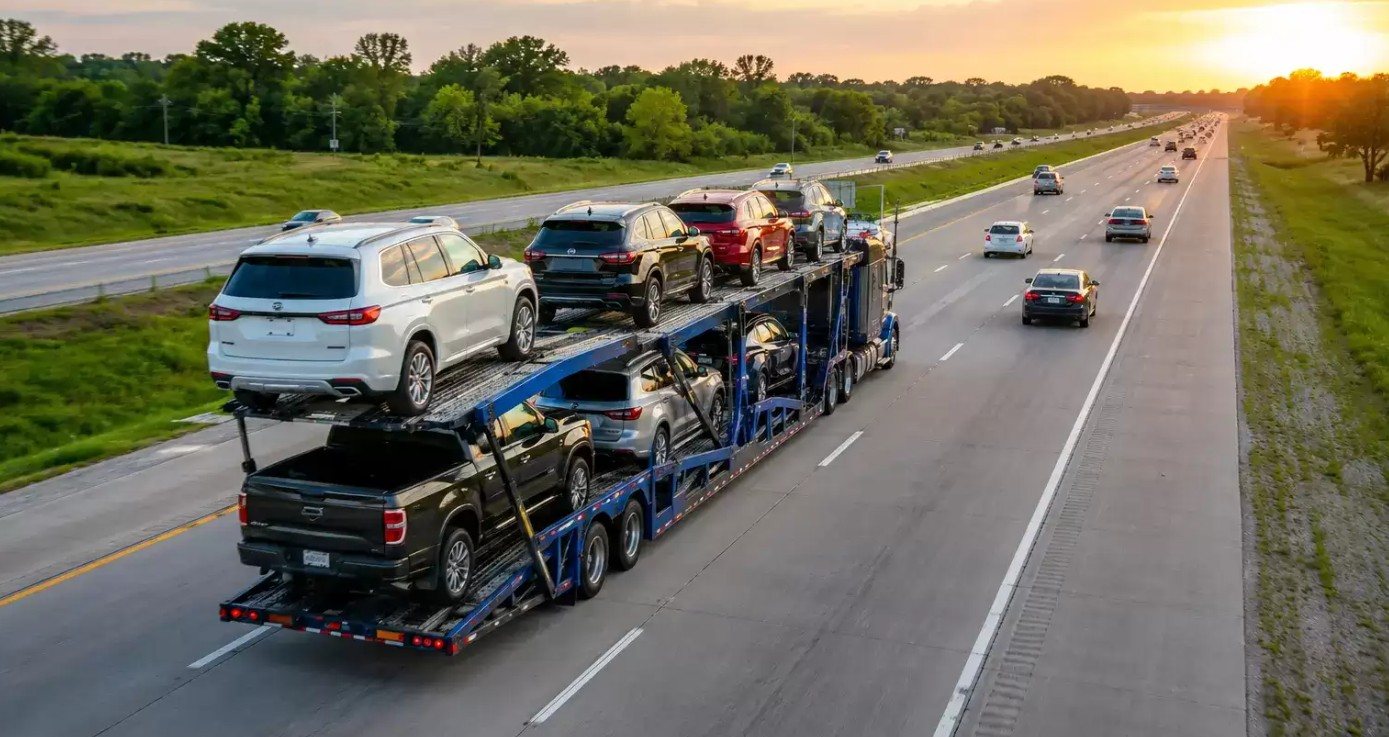
Open car transport is the most common vehicle shipping method in the industry. Open carriers, typically eight-to-ten car haulers, run constantly along I-90 and I-94 through Chicago, I-55 heading south toward St. Louis, and I-57 connecting to Memphis and points beyond. These trucks move the majority of vehicles shipped in the United States every year.
Open car shipping is cost-effective for standard vehicles. If you're moving a daily driver sedan, a crossover, or a work truck, open carrier transport offers the best balance of cost and speed. Open transport is ideal for the vast majority of shipments, and it's the transport method that keeps rates accessible for everyday moves.
The savings compared to enclosed service are significant. On the same Illinois route, open transport often costs 30 to 40 percent less than enclosed shipping. The trade-off is exposure to weather and road debris during transit, but every shipment on Ship Guy's network is insured, and the reality is that damage on open carriers remains uncommon.
Open transport remains the industry standard for a reason. It moves more vehicles, more efficiently, across more routes than any other transport method. For most Illinois car shipping customers, it's the right call.
Enclosed auto transport exists for vehicles where extra protection justifies the higher cost. Think classic cars heading to or from Joliet car shows, high-end SUVs leaving Chicago dealerships, or collector vehicles bound for auctions in Scottsdale or Monterey. Enclosed carriers protect luxury or classic cars from road salt, spring storms, and highway debris that open trailers can't fully block.
Enclosed car transport uses covered or hard-sided trailers, often equipped with a lift gate for low-clearance vehicles. Enclosed trailers shield vehicles from weather and debris throughout the entire journey. For customers in Chicago's North Shore, Naperville, or Hinsdale who are shipping luxury or exotic cars worth $6,000 or more, enclosed car shipping is the standard recommendation.
The Illinois car shipping cost for enclosed service is typically 40 to 70 percent higher than for open service on the same route. But for high-value vehicles, that premium buys climate-controlled protection, lower per-trailer vehicle counts (usually two to four cars), and often higher per-vehicle insurance coverage. Enclosed transport protects high-value vehicles from elements that could cause thousands in cosmetic damage on a single trip.
Ship Guy handles more than standard sedans. Auto transport services in Illinois include motorcycle shipping, project cars, and non-running vehicles that require winch-capable carriers for loading. Motorcycle shipping uses specialized cradles and tie-down systems to keep bikes secure throughout transit. If your vehicle is inoperable, Ship Guy coordinates carriers equipped with a winch or forklift, and that information is communicated before booking, so there are no surprises at the pickup location.
Coordination with Illinois dealerships and online car sellers is another common scenario. Ship Guy arranges direct vehicle pickup from dealer lots, auction houses, and private sales across the state. If you bought a car online from a seller in Peoria and need it delivered to your garage in Denver, the car transport process works the same way.
EV and hybrid shipping requires specific preparation. Ship Guy advises maintaining a moderate battery charge for transport, typically enough to operate door latches and put the vehicle in neutral, without overcharging. Secure tie-down procedures for EVs differ slightly from conventional vehicles, and experienced carriers in Ship Guy's network understand those requirements. Disclosing your vehicle's powertrain type upfront prevents refusals or delays at the pickup point.
Ship Guy breaks the Illinois car transport process into clear, trackable steps. From the moment you request a car shipping quote to the final delivery inspection, every phase has a defined timeline and point of contact. The auto transport process is designed to keep you informed without requiring constant follow-up on your end.
Requesting a quote starts with basic vehicle details: your vehicle's year, make, and model; the origin and destination ZIP codes; whether it's currently running; and your preferred pickup window. These inputs let Ship Guy calculate accurate pricing based on your specific route, vehicle type, and timing.
Quotes differ significantly depending on the route. A Chicago-to-Los-Angeles estimate reflects a roughly 2,000-mile cross-country haul, while a Peoria-to-Phoenix quote covers different mileage and carrier availability patterns. Ship Guy provides transparent car shipping cost estimates, with no hidden fuel surcharges or surprise add-ons. What you see in the quote is what you pay.
Carefully read the shipping contract, focusing on key terms like pickup windows, delivery estimates, and cancellation policies. Getting multiple auto shipping quotes helps you avoid hidden fees and understand where your estimate falls relative to the market. Ship Guy encourages comparison because the numbers hold up.
Once you book, Ship Guy coordinates a pickup date and time range that accounts for your location's logistics. In downtown Chicago, that might mean navigating one-way streets, condo loading zone rules, and rush-hour restrictions. In suburban areas like Schaumburg or Aurora, a large parking area or shopping center lot often works best if a full-size carrier can't access a narrow residential street.
Your assigned driver will call or text before arrival to confirm timing and location. Before handing over the keys, the driver confirms your identity and walks you through the initial vehicle inspection. Door-to-door service eliminates the need for terminal drop-offs in most cases, though Ship Guy will suggest a nearby accessible drop-off location if your street physically can't accommodate a multi-car trailer.
This is the step where communication matters most. Ship Guy's team stays in contact through scheduling, so you're never guessing when or where the pickup will happen. If your plans shift, adjustments are made before the carrier is dispatched.
After vehicle pickup, your car is loaded, secured with professional tie-downs, and routed along major Illinois corridors. Carriers commonly use I-90, I-55, and I-57 as primary arteries depending on destination. Route planning accounts for current construction, weather forecasts, and known bottlenecks.
Most auto transport companies provide tracking for vehicle shipments, and Ship Guy is no exception. You receive periodic updates and realistic ETAs during transit. During winter storms rolling off Lake Michigan or construction season on I-55, those ETAs may shift, and Ship Guy communicates changes proactively rather than leaving you to wonder.
Typical transit times for popular routes from Illinois are as follows: Chicago to Atlanta, 3 to 4 days; Chicago to Phoenix, 5 to 7 days; and Chicago to Dallas, 3 to 5 days. These are in-transit estimates, not total timelines. Your overall experience includes booking lead time before the carrier arrives.
As your vehicle approaches its delivery location, the driver calls to coordinate arrival near the given address. If local streets can't accommodate a full-size hauler, the driver will arrange a nearby meeting point, often a wide intersection, parking lot, or commercial area within a short distance.
At delivery, you and the driver conduct a joint inspection using the Bill of Lading. This document records the vehicle's condition at both pickup and drop-off. Note any new scratches, dents, or damage before signing. Once you sign, you're confirming the vehicle's condition upon delivery.
Ship Guy's support team remains available after your car arrives at its destination. If you find an issue during or after inspection, the team assists with the next steps, including working with the carrier to resolve claims. Payment timing follows the terms confirmed during booking, with no surprise charges at delivery.
Most Illinois car shipping cost estimates fall within predictable ranges once you know the distance, route, and transport type. Rates for auto transport in Illinois typically range from $0.50 to $2.00 per mile, with the per-mile rate decreasing as distance increases. Longer hauls cost less per mile compared to shorter regional trips because carriers spread fixed costs over a greater distance.
Shipping a standard sedan from Chicago to Houston costs $700 to $900 on an open carrier. Enclosed car shipping for the same vehicle costs $1,000 to $1,300 on that route. The average cost to ship a car from Chicago ranges from $700 to $1,200, depending on destination and service level. Transport costs vary based on distance, vehicle type, and transport method.
For longer routes, expect higher totals but lower per-mile rates. Chicago to Los Angeles on open transport often lands between $1,100 and $1,500 for a standard vehicle, while enclosed service on that corridor can push well above $1,800. Seasonal demand, particularly during summer moving season and winter snowbird migrations to Florida or Arizona, can push rates toward the higher end of these ranges.
Ship Guy provides line-item transparency on every quote: the base rate, any express service fee, and the insurance included. There's no bundled mystery charge labeled "processing" or "fuel adjustment" that inflates the final number after you've already committed.
Distance, route popularity, and shipping distance are the biggest pricing levers. Shipping from Chicago to a major metro like Dallas, Atlanta, or Los Angeles means your vehicle rides a high-traffic corridor with strong carrier availability. Shipping from a small town south of I-70 in rural southern Illinois means the carrier may drive significant deadhead miles just to reach you, and that cost gets reflected in the quote.
Vehicle size and weight directly change pricing. Transporting an SUV or truck costs more than transporting a standard sedan because larger vehicles take up more trailer space and add weight to the load. A compact sedan versus a dually pickup truck can mean a difference of $200 or more on cross-country routes.
The choice between open transport and enclosed shipping creates the most visible cost split. On the same route, enclosed service runs 40 to 70 percent higher due to limited trailer capacity and the specialized equipment involved. Winter in Illinois can also push short-term rates higher as carriers navigate snow, ice, and reduced scheduling flexibility.
Pickup flexibility affects pricing, too. Offering a wide pickup window of several days gives Ship Guy more room to match your shipment with a carrier already running your corridor. Requesting guaranteed pickup service on a specific date, or expedited car shipping with a compressed timeline, adds a premium, often 15 to 30 percent above standard rates. Expedited shipping options exist for time-sensitive moves, but plan ahead whenever possible to keep costs down.
Fuel price fluctuations and carrier availability round out the equation. When diesel prices spike, transport costs adjust. During peak seasons, carriers prioritize high-volume corridors, which can temporarily raise rates or extend lead times for less-traveled routes.
Most in-region vehicle shipments within the surrounding Midwestern states take one to three days in transit after pickup. Cross-country moves extend that window significantly. Shipping within Illinois typically takes 1 to 2 days, whether you're moving a car from Chicago to Springfield or Rockford to Champaign.
For interstate routes, here's what to expect under normal conditions. The Chicago-to-Detroit route often takes 1 to 2 days. A Chicago-to-Denver trip typically takes three to five days. Chicago to Miami averages four to six days. Chicago to Los Angeles lands in the five-to-seven-day range. Vehicle transport in Illinois typically takes 1 to 2 days for local shipments, while coast-to-coast moves naturally take longer.
The total timeline includes more than just driving time. Booking lead time, carrier assignment, and pickup coordination all add days to the time before your vehicle actually hits the road. Ship Guy advises booking 1 to 2 weeks in advance when possible, and 2 to 3 weeks for enclosed transport or peak-season moves. If you plan ahead, you give Ship Guy more flexibility to match your vehicle shipment with the right carrier at the best rate.
Road construction on I-55, winter storms fed by Lake Michigan's lake-effect patterns, and spring flooding across central Illinois can all extend transit by a day or two. Ship Guy factors known seasonal risks into ETAs so estimates remain realistic rather than optimistic.
Proper preparation reduces delays, eliminates inspection disputes, and minimizes potential damage during auto transportation. A few simple steps before your vehicle pickup date save headaches on both ends of the trip.
Start with a light exterior wash so existing scratches, dents, and chips are visible during the pre-transport inspection. Remove personal belongings before vehicle transport. Carriers aren't liable for loose items inside the vehicle, and extra weight can cause shifting during transit. Leave about a quarter tank of fuel, enough for loading and unloading without adding unnecessary weight.
Maintain tire pressure to ensure safe transport. Properly inflated tires allow the vehicle to roll on and off the trailer smoothly. Check for fluid leaks and address them before pickup. A leaking vehicle can damage other cars on the trailer and may be refused by the driver.
Ensure your vehicle has a moderate battery charge for transport. The battery needs enough juice to start the car, operate windows, and release the parking brake during loading and unloading. This is especially important for EVs and hybrids in cold Illinois winters, when battery performance can drop.
Document your vehicle's condition before shipping. Take date-stamped photos in daylight from all four corners, the roof, and close-ups of any existing damage. Whether you're in Chicago, Rockford, or Champaign, these photos create an objective record that protects you if a dispute arises after delivery.
Be available at the pickup location, or appoint a trusted adult who has keys and a copy of your registration. The driver needs someone present who can authorize the shipment and sign the Bill of Lading.
Walk around the vehicle with the driver during the initial thorough inspection. Confirm that any existing scratches, dents, or cosmetic issues are noted on the Bill of Lading before the car is loaded. This document is your proof of condition at departure. Hand over one set of keys only and keep your spares safely at home.
Perform a thorough inspection upon vehicle delivery. Check paint, glass, bumpers, wheels, and the roof in daylight, especially after long interstate hauls, when road debris is common. Compare the vehicle's current condition against your pre-shipping photos and the Bill of Lading.
If you spot any new damage, note it on the delivery paperwork immediately before signing. Once you sign an unmarked Bill of Lading, filing a claim becomes significantly harder.
Ship Guy's support team assists with the next steps if issues are found, including coordinating with carrier insurance to process claims. Your car shipping experience doesn't end at drop-off. Ship Guy stays available until the vehicle reaches you in the condition it left.
Not all car shipping companies and brokers deliver the same quality in Illinois vehicle shipping. The gap between a reliable transport company and a problematic one often comes down to licensing, insurance, and communication practices. Most auto transport companies act as brokers who hire independent drivers, which means the broker's vetting process directly determines your experience.
Verify the company's MC and USDOT numbers on the FMCSA registry. This confirms active operating authority and lets you check safety records and insurance filings. For in-state moves, also verify compliance with the Illinois Department of Transportation. Verify if the company is properly licensed and insured before handing over your vehicle or any deposit. Select companies that prioritize customer communication and tracking so you're never left guessing where your car is.
Confirm the company provides the transport service you need. Look for companies offering both open and enclosed transport options so you're not locked into a single service tier. Choose companies with a solid history and positive feedback. Read customer reviews to gauge service reliability across different routes and seasons. Compare quotes from multiple highly recommended companies to understand where pricing falls and spot outliers.
Be cautious of ultra-low teaser quotes. A quote significantly below market rate often signals a bait-and-switch, where the price jumps after booking, or a carrier that cuts corners on insurance, equipment, or communication. The cost to ship a vehicle should reflect real market conditions, not a number designed to win your click.
Ship Guy's commitment to realistic pricing, documented terms, and responsive communication from first quote to final delivery is why customers return. When your vehicle arrives on time and undamaged at the quoted price, that's not luck. It's a process.
Downtown Chicago pickups present unique challenges that not every car transporter handles well. One-way streets, restricted loading zones, tight alleys behind brownstones, and condo association rules about commercial vehicles all require carriers with specific Chicago experience. An out-of-state carrier unfamiliar with the city may show up unprepared, causing delays and frustration for everyone.
The contrast between dense Chicagoland suburbs like Naperville, Schaumburg, and Evanston and rural areas in central and southern Illinois is significant. Carrier availability drops sharply outside major population centers. A pickup in downstate Effingham or Carbondale may require longer lead times and slightly higher rates due to fewer carriers passing through those areas.
Knowledge of local weather patterns also separates experienced Illinois auto carriers from the rest. Lake-effect snow piling up along the I-94 corridor, spring flooding across river towns, and ice storms shutting down I-55 south of Bloomington are seasonal realities. Carriers who know these patterns build buffer time into their schedules rather than promising unrealistic delivery windows. Ship Guy's network includes carriers that regularly run Illinois routes, which means fewer weather-related surprises and a more stress-free experience for you.
Ship Guy regularly handles vehicle shipping from Illinois to both nearby states and coastal destinations across the country. High-volume corridors mean faster scheduling and better rates, while less-traveled routes may require additional lead time.
Chicago to Orlando is one of the busiest outbound routes, driven by relocations and snowbird traffic. Ship Guy moves vehicles on this corridor year-round, with peak demand during October through December as residents head south. Chicago to Dallas–Fort Worth is another high-frequency route, typically running three to five days in transit on open transport.
Westbound routes from Chicago to Seattle and from Springfield to Phoenix serve military relocations, job transfers, and retirees heading to warmer climates. These cross-country routes use established interstates like I-80 and I-40 and generally take five to seven days in transit, depending on weather and construction.
Inbound traffic is just as active. Snowbirds returning vehicles to Chicago from Tampa or Fort Myers in late March and April create seasonal volume spikes that actually improve carrier availability on those return legs. Ship Guy leverages this directional demand to offer competitive rates on northbound Florida-to-Illinois moves.
Ship Guy also serves coast-to-coast corridors beyond the most common routes. Whether you're shipping to Rhode Island, the Pacific Northwest, or anywhere in between, the network covers all 48 contiguous states. High-volume corridors can be scheduled more quickly than shipments originating from low-population areas in southern Illinois or far western parts of the state, so plan ahead for those less-traveled lanes.
Shorter routes within Illinois and the surrounding region are a core part of Ship Guy's business. Chicago to Champaign–Urbana for university moves, Peoria to Bloomington-Normal for dealer trades, and cross-border runs to Milwaukee or Indianapolis all fall into the one-to-two-day transit window after pickup.
These regional shipments are ideal for dealer inventory transfers, auction purchases, and college students who need a car on campus but can't make the drive. Illinois shipping on these shorter corridors moves quickly because carriers frequently run these legs as part of longer routes, picking up and dropping off vehicles along the way.
Ship Guy coordinates with campuses, dealerships, and storage facilities to ensure seamless regional vehicle transport. Whether the pickup is at a university parking garage in Urbana or a dealer lot in Rockford, the logistics are handled the same way as a cross-country move, just faster.
If you're ready to ship a car to or from Illinois, Ship Guy makes the process straightforward. Request a personalized Illinois car shipping quote by providing your ZIP code, vehicle details, and preferred timeline. You'll receive a transparent estimate with no hidden fees, covering your specific route, vehicle type, and service level.
Ship Guy supports both single-vehicle moves and multi-car shipments for families, businesses, and dealerships. Whether you need to ship cars for a fleet rotation, move a luxury vehicle in enclosed shipping, or get a college student's sedan from Chicago to campus, the auto transport needs are handled with the same level of care and communication.
Dependable timing, transparent pricing, insured shipments, and experienced Illinois route planning set Ship Guy apart from the best auto transport and car shipping companies in the market. Don't wait until the last week before your move. Lock in your rate, secure your pickup window, and let Ship Guy handle the miles. Your instant car shipping quote is one conversation away.
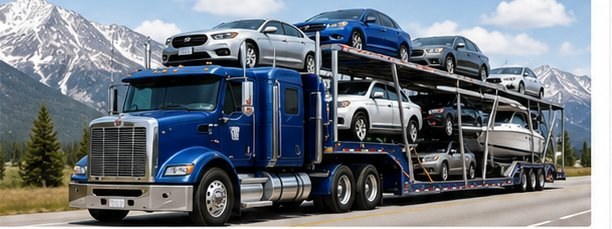
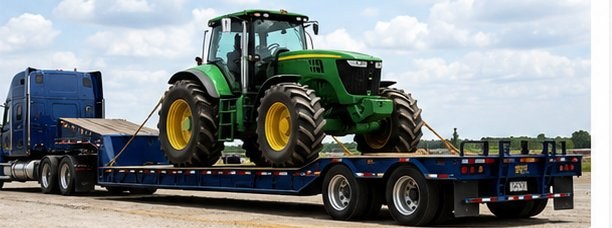
What We Ship
Nationwide transport solutions for vehicles, household goods, equipment, and freight.


Questions?
Everything you need to know before you ship.
Get Started
Call now or request a free quote. Transparent all-in pricing, no upfront deposit, vetted carriers, and 24/7 U.S.-based support.
Ready When You Are
Get a free, no-obligation quote in about 60 seconds — or call and talk to a real specialist right now.