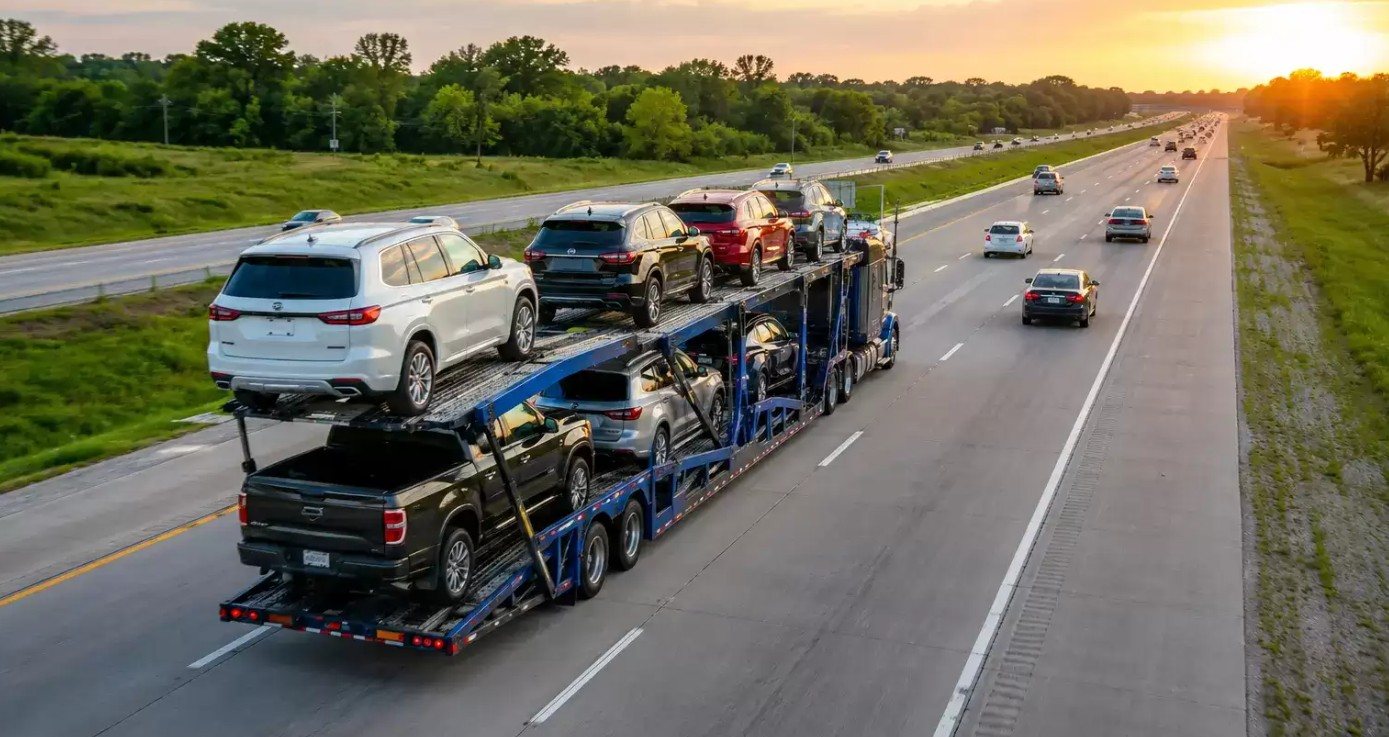
Port-side auto transport with the fastest carrier response in the West — import fluent, neighborhood smart, no deposit to book.
Licensed Broker & Fully Insured
FMCSA Registered
Vetted Carrier Network
Real-Time Tracking & 24/7 Support
50+States Served
100%Insured Transport
24/7Support & Tracking
Most cities ship cars from somewhere near the action. Long Beach is the action: half of the busiest port complex in the Western Hemisphere sits inside the city limits, feeding a permanent ecosystem of car haulers, bonded lots, and vehicle logistics that the rest of the country borrows daily. For residents, that translates into the fastest carrier response in the West; for the nation’s importers — and the JDM faithful awaiting their 25-year classics — it makes this city the front door.
Quick answerLong Beach lives beside the busiest port complex in the hemisphere, and shipping here inherits the advantage: same-day to 48-hour carrier response, $300–$575 around the Southwest and up the coast, $775–$1,175 to the Rockies and Texas, and $1,075–$1,575 coast-to-coast for a sedan on an open trailer. Importing through the terminals, or landing a 25-year JDM classic? That last leg is a local specialty, covered below. Price your lane in two minutes.
Ship Guy works Long Beach from an office on Ocean Boulevard with the cranes on the horizon — residential moves across every neighborhood, the import last-leg trade from the terminals, and the full lane map west of the Mississippi. Below: why port proximity is a resident’s superpower, how terminal pickups and import logistics actually run, the JDM pipeline in loving detail, the April street-circuit calendar, and rates on the ten lanes the city books most.
Typical pickup1–3 days
Nearest listed laneLas Vegas, NV · $300–$475
Longest listed laneNew York, NY · $1,175–$1,575
Enclosed option+40–60% over open
Local desk(562) 362-5740 · 6a–11p PT
Updated July 25, 2026 · rate figures: July 2026 board.
Long Beach Shipping Lanes & Current Rates
The lanes we run from the port’s doorstep. Sedan baseline, running condition, open trailer; import last-legs and enclosed quoted by vehicle.
RouteApprox. distanceEst. transitEst. open rate*
Long Beach, CA → Las Vegas, NV~285 mi1 day$300–$475Get price
Long Beach, CA → Phoenix, AZ~365 mi1–2 days$310–$490Get price
Long Beach, CA → San Francisco Bay Area~400 mi1–2 days$360–$575Get price
Long Beach, CA → Salt Lake City, UT~700 mi2–3 days$650–$900Get price
Long Beach, CA → Denver, CO~1,030 mi3–4 days$775–$1,075Get price
Long Beach, CA → Portland, OR~980 mi2–4 days$725–$975Get price
Long Beach, CA → Houston, TX~1,545 mi3–5 days$875–$1,175Get price
Long Beach, CA → Atlanta, GA~2,175 mi4–7 days$1,075–$1,475Get price
Long Beach, CA → Chicago, IL~2,020 mi4–6 days$1,075–$1,425Get price
Long Beach, CA → New York, NY~2,795 mi5–8 days$1,175–$1,575Get price
*Market conditions July 2026, standard sedan; SUVs and trucks generally +10–25%, dimensional pricing for oversized, +$100–$200 winch fee for non-runners. Freshly imported vehicles should flag any quirks — odd batteries, immobilizers, kilometer clusters — at booking, not at the ramp.
Best time to book from here
Port rhythms keep this lane liquid every month; summer stacks the family season. Softest pricing arrives with the winter marine layer, December–February.
Living Beside the Machine: The Port-Proximity Advantage
Every vehicle logistics network in the West touches the San Pedro Bay terminals eventually — and the equipment that serves them doesn’t commute from far away. Car haulers stage in the industrial districts along the 710, cycle through the bonded lots between assignments, and treat greater Long Beach as home base rather than destination. When you book a shipment from a Long Beach address, you’re not summoning a truck; you’re flagging one down mid-orbit.
The measurable results: pickup response that routinely beats 48 hours and frequently beats 24; replacement capacity when plans change measured in phone calls, not days; and scheduling precision — a driver five miles away keeps a two-hour window in a way a driver fifty miles out never can. Rates ride the broader metro market (Long Beach doesn’t price separately from the LA pool, and our Los Angeles page covers those economics), so the local dividend is paid in speed and reliability rather than dollars — the two currencies that matter most once a deadline exists.
One neighborly note: the same port traffic that blesses response times occasionally clogs the 710 itself. Drivers here plan around terminal rush the way everyone else plans around office rush — midday residential windows, early-morning long-haul departures — and the choreography is invisible unless you know to admire it.
A composite Tuesday from our books, for flavor: a Bixby Knolls family’s SUV loads at 10 AM for Denver; by noon the same truck adds a wholesale sedan from the auction lanes; at 2 a bonded lot releases a German import that rides the last open spot to a buyer in Scottsdale; and the whole load clears the 15 by dinner. Four customers, one orbit, zero special arrangements — that’s the port shadow working as designed, and your booking simply steps into it.
From Ship to Street: How Terminal Pickups Really Work
For imported vehicles, the journey’s last chapter starts when customs clears the car — and the port’s rules govern everything until it’s on our truck. The sequence, demystified: your customs broker or freight forwarder handles entry, duties, and release; the terminal or a bonded facility then makes the vehicle available inside defined pickup windows; and the carrier arrives inside that window with the release documentation matching to the letter, because terminals turn away paperwork that almost matches. We coordinate the window, the documents, and the equipment — and then the vehicle is simply freight in our care, deliverable to any driveway in America.
Exports mirror the process: we deliver your vehicle to the forwarder’s receiving dock or terminal gate on their schedule, condition-documented at handoff, with the ocean side belonging entirely to your forwarder. In both directions the division never blurs: customs work is theirs, trucking precision is ours, and a broker who claims to do both from one phone call deserves a second look at their licensing.
A timing truth worth internalizing: port schedules answer to vessels and customs queues, not to trucking convenience — so import timelines firm up late, and the smart move is booking the land leg the moment release looks imminent rather than after it lands. We hold the plan lightly until the port speaks, then move fast when it does.
The 25-Year Parade: Long Beach and the JDM Pipeline
Every month, another cohort of Japanese-market legends turns twenty-five and becomes legally importable — and a remarkable share of them enter America through the terminals visible from this office. Skylines and Silvias, Chasers and Cappuccinos, kei trucks bound for hobby farms: the JDM pipeline is a genuine subculture, and its final logistics leg is work we’ve grown to love.
What makes a freshly landed JDM car different, practically: it’s right-hand drive, which changes ramp loading sightlines; it may be lowered, aged, or both, wanting a liftgate rather than steep ramps; its battery, tires, and fluids reflect a long voyage and a previous life in another hemisphere; and its immobilizer, alarm, or kilometer-reading cluster can surprise a driver who’s never met one. Our JDM handoffs run accordingly — enclosed equipment by default for anything collectible, drivers briefed on the vehicle’s quirks before the ramp, and the honest pre-trip advice every new import owner deserves: have it inspected and fluids serviced before the car’s first real American drive, ideally at the destination end rather than trusting a jet-lagged machine to a freeway on day one.
The pipeline flows outward from here to every state — which means for buyers nationwide, the “Long Beach to your door” leg is the whole shipping story. Book it when your importer confirms the vessel, and your new old car’s American life starts with its best foot forward. (And yes — we’ll photograph it on the truck for the group chat. Everyone asks; everyone gets the photo; the forums have standards to maintain.) Sellers moving a JDM car onward — the hobby’s cars change hands often — get the identical treatment in reverse, enclosed door to enclosed door, provenance photos included. In a hobby built on paper trails and originality, the shipping record has quietly become part of the car’s story too.
Selling to the World: When Your Car Leaves Through the Gate
The import pipeline gets the romance, but the gate swings both ways — and for American sellers, the export side is quietly lucrative. Overseas demand runs hot for exactly what U.S. driveways produce: late-model SUVs and trucks bound for Gulf-state and West African buyers, clean luxury sedans headed across the Pacific, and American classics — muscle cars especially — commanding collector premiums in Europe that domestic listings can’t touch. If a foreign buyer has found your listing, the terminals down the street are how the deal completes.
The seller’s mechanics, in order: the buyer (or their agent) engages a freight forwarder, who books vessel space and handles the export side — including the title-surrender process customs requires before any vehicle leaves the country. Your obligations are the ones we help with: the vehicle delivered to the forwarder’s receiving dock inside their window, condition-documented at handoff, empty of belongings, keys and title logistics squared exactly as the forwarder instructs. Payment discipline mirrors any remote sale, amplified: funds fully settled — not “initiated” — before the car moves an inch toward a dock, because a vehicle at sea is a poor collateral position.
Our role is the domestic leg and the honest counsel around it: we’ll flag when an “overseas buyer” pattern smells like the classic escrow scam (there is one, and it loves car sellers), and we’ll coordinate timing directly with the forwarder so your part ends at their gate, cleanly. From there, the same cranes that brought the Skylines in send the Silverados out — the port’s great circle, and your sale riding it. Sellers curious what their vehicle might command abroad should ask their forwarder for comparable export sales before pricing a domestic listing — the spread on the right truck or classic can fund the entire logistics chain with room left over.
The Neighborhood Year: Campus Tides and Coastal Rhythms
Around the port’s constant hum, residential Long Beach keeps a gentler calendar. Cal State Long Beach adds the academic tide — late-August arrivals concentrated in the neighborhoods east of campus, May departures reversing them — with the standard college-town counsel applying: parents book remotely, students sign locally, and nobody schedules a handoff for move-in Saturday itself. The beach communities run a soft seasonal rhythm of their own, summer subletters and winter returners rotating vehicles on a schedule the Shore’s parking situation enforces better than any broker could.
And once a year the calendar crescendos: race week, when the downtown circuit fills with engines shipped in from everywhere — a reminder, if the cranes weren’t enough, that this city’s relationship with vehicle logistics runs closer to identity than industry. Ship around it, ship to it, or ship because of it; we’ve done all three in the same April.
The through-line of the whole neighborhood year: in a city where logistics is the hometown industry, residential shipping inherits professional-grade habits by osmosis. Handoffs run punctual because the whole town runs on windows; documentation comes naturally because everyone here knows someone who works the terminals; and the question “can you really pick up tomorrow?” gets answered yes more often than anywhere else we operate, for reasons visible from the shoreline.
Open or Enclosed from the Port City?
The daily fleet ships open like everywhere in SoCal — but this zip code generates more genuine enclosed cases than most.
The everyday answer
Open Transport
Commuters, family cars, relocation fleets: open trailers in the mildest big-city climate in America, matched at port-shadow speed. The coastal air is a cosmetic non-event in transit — the corrosion story belongs to long-term outdoor parking, not to a two-day ride.
Fastest matches in the West via the 710 ecosystem
Metro-pool pricing with port-side responsiveness
Cargo coverage typically $100K–$250K
The import standard
Enclosed Transport
Freshly landed JDM classics, European imports, collector cars leaving the terminals: enclosed is the default for the port’s precious cargo — liftgates for the lowered, soft straps for the irreplaceable, and walls between a 25-year milestone and its first American road debris.
Right-hand-drive and low-clearance loading expertise
Roughly 40–60% above open; quoted by vehicle
Cargo coverage $250K–$1M, higher arranged
Port-city rule: if it cleared customs this month, it probably wants walls; if it’s the family Camry, the open deck and the savings are yours. Full detail: open vs. enclosed.
Shoreline to the Knolls: Where We Pick Up and Deliver
A city of many street eras, each with its five-minute answer.
Downtown / ShorelineAlamitos BeachBelmont ShoreBelmont HeightsNaplesBluff ParkRose ParkSignal HillBixby KnollsCalifornia HeightsWrigleyLos AltosEl Dorado ParkNorth Long BeachWest Side
The 710 shadow advantage
The corridor between the terminals and the freeway junctions hosts a permanent working population of car haulers — drayage, dealer runs, auction loads — and residential Long Beach sits inside their daily orbit. It’s why a pickup here matches in hours that would be days elsewhere: the trucks aren’t coming to you, they’re already circling.
Belmont Shore to Bixby Knolls
Long Beach’s neighborhoods span a century of street design: Belmont Shore’s tight beach grid meets the driver a block off Second Street; the historic districts’ narrow lanes shift to wider cross streets; Bixby Knolls and East Long Beach load suburban-easy. Every zone has its answer, and none of them costs extra.
April on Shoreline Drive
The Grand Prix converts downtown’s waterfront into a street circuit each spring — and the barriers go up weeks before the green flag. During the buildout, Shoreline-area handoffs slide a few blocks inland or a few days sideways, tracked on our calendar automatically. If you time a JDM import’s delivery to race weekend on purpose, we understand completely.
And the harbor-adjacent neighbors, daily
San PedroWilmingtonCarsonLakewoodSeal BeachLos AlamitosCerritosTorrance
Why Ship with Ship Guy in Long Beach
Licensed & bonded
FMCSA authority, the $75,000 surety bond, and a SAFER record we invite you to pull up — in a port town, paperwork discipline is the whole culture.
Terminal fluency
Release windows, bonded lots, documentation that matches to the letter — the port’s procedures are our home turf, learned at the source.
The import specialists’ broker
RHD loading, liftgate defaults, immobilizer briefings — the JDM and classic-import trade gets handled by people who know why the kilometer cluster matters.
Speed you can schedule around
Port-shadow response times mean plans, not hopes — and payment waits until a carrier is actually assigned, whatever the countdown timers elsewhere insist.
Find Us on Ocean Boulevard
Our Long Beach office overlooks the shoreline downtown — the port cranes on one horizon, the Grand Prix circuit under our windows every April. Local line staffed daily.
What's the cost to ship a car to or from Long Beach?
Sedan on open transport: roughly $300–$475 to Phoenix or Las Vegas, $350–$575 up to the Bay Area, $775–$1,075 to Denver or the Pacific Northwest, $850–$1,175 into Texas, and $1,075–$1,575 for cross-country runs. Enclosed adds 40–60%; container-import last legs quote by vehicle. Living beside the port means quotes here draw on the thickest truck traffic in the West.
How fast can a carrier reach me in Long Beach?
Often same-day to 48 hours — genuinely among the fastest response zones in the country. The port complex keeps a permanent population of car haulers working the 710 corridor, and a Long Beach residential pickup is a five-minute detour for equipment that's already circling. Proximity to the machine has its perks.
I'm importing a car through the port — how does pickup work?
Once your customs broker secures release, the vehicle becomes available at the terminal or a nearby bonded lot on a pickup window. We collect within it — port appointments aren't suggestions — and deliver anywhere in the country. Twenty-five-year-rule imports and other enthusiast cars typically transfer straight onto enclosed equipment; tell us the vehicle and we'll match the trailer to it.
Do you handle the JDM and classic-import scene specifically?
Weekly. Long Beach is one of America's main gateways for Japanese-market classics — Skylines, Chasers, kei trucks, and the rest of the 25-year parade — and their last leg from port to owner is a specialty of ours: enclosed carriers comfortable with right-hand-drive loading, low-clearance ramps for lowered examples, and honest talk about a freshly-landed car's quirks before anyone drives it up a ramp.
Does the Grand Prix affect shipping downtown?
For a few April weeks, yes — the street circuit along Shoreline Drive means barriers, grandstand construction, and closures through downtown well before race weekend. Downtown and Shoreline-area handoffs shift a few blocks inland or a week sideways during the buildout; we track the race calendar so you don't have to. The rest of the city never notices.
Can you ship my car if I live in a downtown tower or near the beach?
Yes — downtown's grid is far more forgiving than LA's, and most of Long Beach loads on wide streets near home. Ocean Boulevard towers use the same nearby-block system as any urban core; the beach neighborhoods east along Belmont Shore work best with a handoff on Second Street's cross streets or a nearby lot. Minutes of walking, not dollars of surcharge.
Is Long Beach cheaper to ship from than LA proper?
The rates are effectively the same — one metro market — but Long Beach often wins on speed and simplicity: easier streets than the LA core, and that permanent port-side carrier population means shorter waits for a match. Same money, less friction is a fair summary.
Where is Ship Guy located in Long Beach?
555 E Ocean Blvd #890, Long Beach, CA 90802, downtown near the shoreline. The local line is (562) 362-5740, answered daily from 6:00 AM to 11:00 PM.
Get a free, no-obligation quote in about 60 seconds — or call and talk to a real specialist right now.
Licensed & insured
No upfront deposit
24/7 support
Ship Guy is a licensed, bonded auto transport broker (MC #1457715 • USDOT #3932149) with a local office at 555 E Ocean Blvd #890, Long Beach, CA 90802 • (562) 362-5740 • open 7 days, 6 AM–11 PM, serving Long Beach, the harbor district, and southeast LA County. Verify our operating authority anytime in the FMCSA SAFER database. Rate estimates on this page reflect current lane conditions and are refreshed quarterly. Learn how insurance & claims work and who we are.
Written & reviewed by [Full Name], [Title], [X] years in vehicle logistics • Last updated: