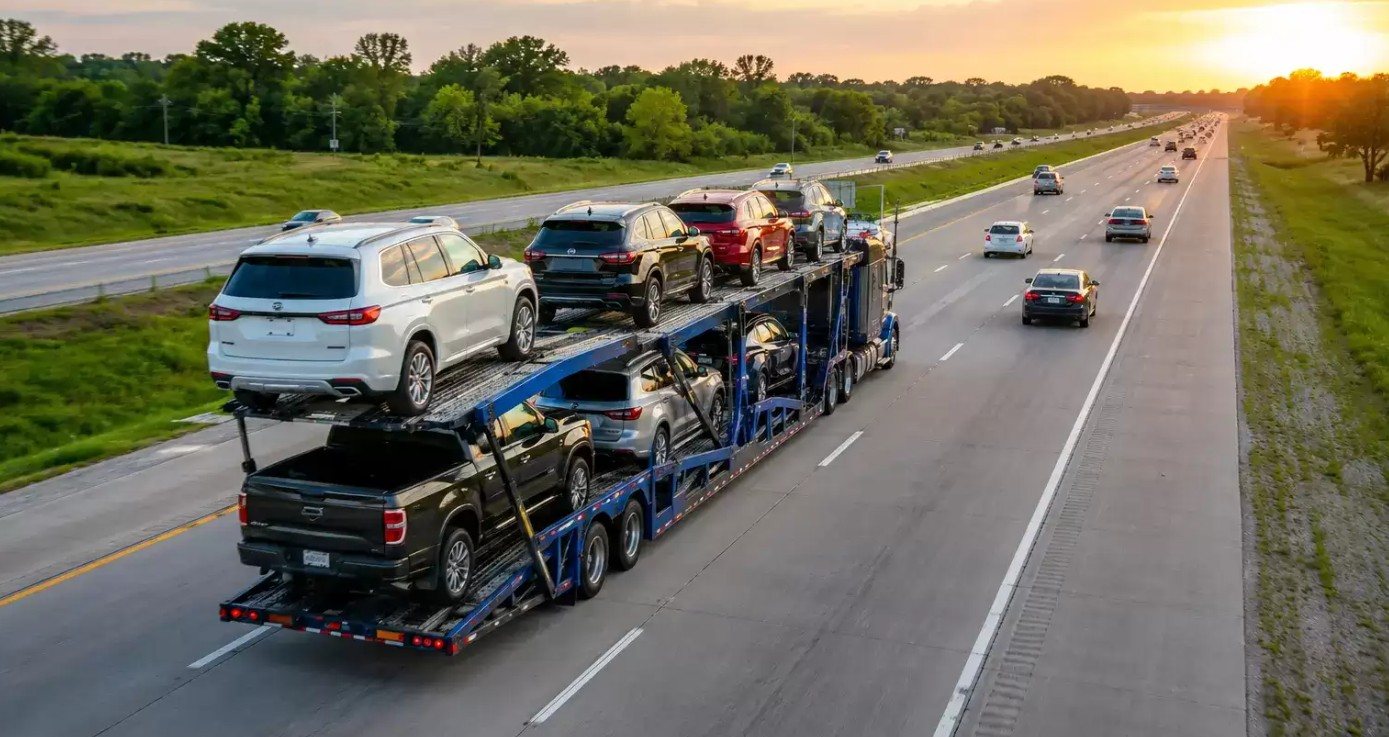
The Rose City’s book — Gorge-literate, EV-fluent, and honest enough to survive the follow-up questions.
Licensed Broker & Fully Insured
FMCSA Registered
Vetted Carrier Network
Real-Time Tracking & 24/7 Support
50+States Served
100%Insured Transport
24/7Support & Tracking
Portland opens the Pacific Northwest chapter of this site with a book unlike any market before it: the I-5 spine carrying the West Coast’s great north-south river past its door, a weather reputation that gets the story backward (the drizzle is nothing; the Gorge is everything), one of the country’s most electrified vehicle fleets, a no-sales-tax purchase economy that keeps delivery trucks busy in both directions, and a bridge-city geography whose customs settled generations ago. Rose City logistics reward local literacy — and this page was written fluent.
Quick answerPortland ships on the West Coast’s great spine: $205–$350 up and down the near corridor, $310–$880 through the mountain West and down to California’s ends, and $980–$1,420 east of the Rockies — pickup in 1–3 days, with the Gorge’s honest chapter as the one real weather variable. EV fluency, purchase-delivery trade, bridge-city customs: the Rose City’s book, below. Price your lane in two minutes.
Ship Guy works Oregon from Broadway downtown — the east side’s grids and the west hills’ lanes, the Silicon Forest corridor, the suburban arcs from Lake Oswego to Vancouver across the river, and the two-season second-home geography out to the mountain and the coast. Below: the spine’s economics, the honest weather chapter, the EV and purchase-delivery trades, the tech corridor’s currents, and the seasonal calendar of a state that does everything — including shipping — a little differently, on purpose.
Typical pickup1–3 days
Nearest listed laneSeattle, WA · $215–$350
Longest listed lanePhoenix, AZ · $600–$880
Enclosed option+40–60% over open
Local desk(971) 274-5706 · 6a–11p PT
Updated July 25, 2026 · rate figures: July 2026 board.
Portland Shipping Lanes & Current Rates
The spine’s working routes — I-5 north and south, I-84 east through the Gorge. Sedan baseline, open trailer.
RouteApprox. distanceEst. transitEst. open rate*
Portland, OR → Seattle, WA~175 mi1 day$215–$350Get price
Portland, OR → Eugene, OR~110 mi1 day$205–$330Get price
Portland, OR → Boise, ID~430 mi1–2 days$310–$490Get price
Portland, OR → Sacramento, CA~580 mi2 days$360–$560Get price
Portland, OR → Bay Area, CA~635 mi2 days$380–$590Get price
Portland, OR → Salt Lake City, UT~765 mi2–3 days$450–$680Get price
Portland, OR → Los Angeles, CA~965 mi2–3 days$520–$780Get price
Portland, OR → Las Vegas, NV~985 mi3 days$560–$840Get price
Portland, OR → Phoenix, AZ~1,330 mi3–4 days$600–$880Get price
Portland, OR → Denver, CO~1,250 mi3–4 days$720–$1,040Get price
*Rose City board, July 2026, sedan basis; SUVs and pickups run 10–25% over, EV quotes account for battery weight, oversized goes by dimensions, and winch loading adds $100–$200. Gorge closures reroute eastbound loads a handful of winter days; ice-storm days pause the metro by civic consensus and resume by the next afternoon.
Best time to book from here
Dry-season months carry the peak; the Gorge’s winter ice adds eastbound flexibility. Book June–September early; price-hunt November–February.
The Spine’s Economics: I-5 and the Coastal River
The West Coast’s freight geography is a single great spine, and Portland sits at its northern hinge: I-5 carries the Seattle-to-California river through the metro daily, the Seattle lane runs like the shuttle it is (three hours, constant equipment, commuter-corridor pricing), and the California legs ride the spine’s depth two corridor days to either end of that state. Eastbound, I-84 threads the Gorge toward Boise and the mountain West — the one lane with a genuine weather asterisk, honestly footnoted below — and the market’s matches land in one to three days on the spine’s constant cycle.
The currents run Northwest-shaped: the tech corridor’s program-timeline relocations, the California exchange in both directions (arrivals trading costs northward, the reverse current chasing sun or family south), the university tides of a state with campuses up and down the valley, and the purchase-delivery trade the no-sales-tax economy generates — cars bought here delivered elsewhere, and the mirror image, daily. One local note the spine rewards: Vancouver across the river ships on the same metro pool, and the bi-state households common here book both sides of the water in one conversation. The bridges make it one market; so do we.
The Honest Weather Chapter: Drizzle, Ice, and the Gorge
Let’s retire the myth first: the rain that built Portland’s reputation is a marine drizzle measured in patience, not inches, and carriers work the gray season without a single adjusted window — wipers on, schedules kept, moss admired. The real almanac has three entries. The ice storms: a few times each winter, freezing east winds pour out of the Gorge and glaze the metro in a silver shell; the city pauses by unanimous consent (nobody here pretends to drive on it, which is its own wisdom), and shipping resumes the next afternoon when the thaw arrives — windows around ice events carry a built-in day, communicated plainly. The Gorge closures: I-84 through the canyon closes for winter weather a handful of days each season, rerouting eastbound loads south and adding a day; we track the passes the way locals track the mountain’s snow report. The heat spikes: a few summer stretches now run genuinely hot, and morning loading becomes pleasant sense rather than necessity.
Everything else is texture: chain laws on the mountain highways in season (relevant to cabin deliveries, not corridor freight), coastal wind asking high-profile equipment occasional patience on 101, and a climate that otherwise treats vehicles more gently than almost anywhere — the famous Northwest no-rust bodywork is real, coveted by buyers nationwide, and one honest reason the purchase-delivery trade runs so busy out of this state. The weather here is mostly a mood; the Gorge is the exception, and we dispatch it with the respect exceptions deserve.
The Purchase-Delivery Trade: Commerce Without the Counter
Oregon’s tax structure built a vehicle-commerce current that keeps this office’s delivery board busy in both directions: buyers elsewhere purchasing from Oregon sellers and dealers, Oregonians buying from out-of-state markets, and the online-marketplace era multiplying both. The logistics craft is the stranger-to-stranger standard at hometown volume — condition documentation thorough enough to reassure a buyer who’s never met the seller, dealer handoffs run on lot schedules daily, auction pickups timed to gate hours, and delivery photographed to close the loop. The honest boundary: tax and registration obligations follow the buyer’s home state’s rules, not the purchase location’s, so we ship the car and recommend your DMV or a tax professional for that math — a sentence that has saved more headaches than any discount we’ve ever offered.
The trade’s regional bonus: Northwest vehicles carry the no-rust reputation buyers nationwide pay premiums for, which keeps the outbound purchase current strong — a clean-bodied wagon leaving for a Midwest buyer is one of this market’s signature shipments — and the enclosed tier serves the collector end of the same trade, where undercarriage photographs are half the sale and our documentation habit becomes the buyer’s due diligence. Commerce this fluid deserves logistics this practiced; on Broadway, it has them. Ten thousand deliveries of other people’s good decisions, documented like we made them ourselves. Buyer confidence is the product; the car is just the cargo.
Silicon Forest and the Professional Currents
The west-side corridor from Hillsboro through Beaverton concentrates the chip fabs, the sportswear campuses, and the engineering economy around them, and its relocation current runs the professional machinery at program-timeline precision: onboarding waves landing in clusters as the employers hire, campus-style addresses shipping dock-and-lot simple, start dates worked backward with employer-format paperwork, and the international pipeline of a corridor that recruits globally bringing the ship-versus-buy conversation we run honestly — against a metro where transit is genuinely good and the Gorge, the mountain, and the coast still argue persuasively for wheels.
The wider professional book rounds out Northwest-style: the healthcare systems’ recruiting cycles, the university calendars up and down the valley, the creative-economy churn of a city that exports taste, and the remote-work settlers who chose the Rose City on quality-of-life math and ship in on flexible dates that ride the spine’s soft weeks beautifully. Add the two-season second-home trade — mountain cabins on ski calendars, coast houses on summer ones — and the year fills the way this city likes its calendars: varied, deliberate, and reliably interesting. Exactly like the city, which we suspect is not a coincidence. Markets inherit their cities’ personalities; ours got a thoughtful one and runs accordingly. Deliberate, a little independent, and better documented than strictly required. Which, in this town, is precisely the required amount.
Mountain and Coast: The Two-Season Second-Home Trade
Oregon’s recreational geography runs a two-season vehicle calendar the trade serves fluently: the mountain’s cabin country positions vehicles ahead of ski season on chain-law calendars, with lodge-lot and village-junction meets, midweek winter deliveries beating the resort-traffic weekends by hours, and conditions checked the morning of by standing habit; the coast runs the mirror rhythm — summer houses stocked ahead of the season, 101’s wind asking high-profile equipment occasional patience, and the beach towns’ highway pull-outs serving as the practiced meets they’ve always been. Between the two, the Bend corridor’s high-desert boom draws its own steady current over the passes, seasonal by the same mountain arithmetic.
The two-home counsel, Northwest edition: book both legs of a seasonal round-trip as one plan with the counter-flow savings named, let mountain windows breathe around storm cycles rather than fighting them, and keep the cabin car’s kit honest — chains where required, battery strong, tank above a quarter. The state’s beauty runs on weather that deserves respect; the trade that serves it learned respect first, and schedules second. In that order, always — the mountain has seniority. Union town; we respect the roster.
The Rose City Year
The calendar, straight through: winter runs the gray season’s steady trade — drizzle irrelevant, ice events pausing a day when the Gorge exhales, mountain deliveries timed midweek around chain laws, and inbound arrivals riding the year’s calmest quotes; spring wakes the purchase trade and the first coast positioning while the valley turns implausibly green; summer peaks everything — the relocation season on school calendars, the coast houses stocked, the festival months humming, and morning loading through the occasional heat spike; and fall closes with the tech corridor’s autumn onboarding, the mountain cabins’ pre-season positioning, and the Gorge’s first advisories reminding dispatch to reopen the winter notes.
Through every season, the constants: spine equipment cycling daily, the EV checklist running on every electric booking, and a dispatch culture tuned to a metro that plans carefully, questions thoroughly, and rewards the broker whose answers survive the follow-up. Portland reads the fine print; we write ours to be read. Footnotes included, sources cited, follow-up questions genuinely welcome. The follow-ups are usually excellent, too — this city interviews its vendors like it’s hiring, and it is. We’ve passed the interview enough times to keep the contract, and we prep for every renewal. References on file, sources cited, and the coffee order memorized — the full Portland vendor package. Oat milk noted, obviously; sustainability report available upon request.
Open or Enclosed in the Rose City?
The spine ships open through the gentle climate; the enclosed tier serves the no-rust treasures.
The spine answer
Open Transport
Corridor relocations, purchase deliveries, the Seattle shuttle: open trailers on I-5 depth, through a climate that treats vehicles more gently than almost anywhere — drizzle included, myth retired. The default, priced by the river.
West Coast spine at corridor depth
EV checklist standard on every electric booking
Cargo coverage typically $100K–$250K
The collector answer
Enclosed Transport
No-rust classics leaving for buyers nationwide, the west hills’ collections, and the vintage culture of a city that restores everything: enclosed walls, liftgate patience, and undercarriage documentation that closes sales.
Roughly 40–60% above open rates
Purchase-trade documentation to buyer standard
Cargo coverage $250K–$1M, higher arranged
Rose City rule: the commuter rides open down the spine; the survivor rides enclosed to its next caretaker. Full comparison: open vs. enclosed.
Bridges to the Buttes: Where We Pick Up
The quadrants, the hills, and the arcs — each with its practiced answer.
Downtown / Pearl DistrictNorthwest / SlabtownSoutheast / HawthorneNortheast / AlbertaNorth Portland / St. JohnsWest HillsSellwoodLake OswegoBeavertonHillsboroTigardGreshamMilwaukieOregon CityVancouver, WA
The Gorge, given its honest chapter
The Columbia’s canyon funnels the region’s real weather: east winds that glaze the metro in the famous ice storms (the whole city pauses a day, by unanimous civic consent), winter closures on I-84 that reroute eastbound loads south and add a day, and summer gusts that ask high-profile equipment a moment’s patience. The drizzle gets the reputation; the Gorge earns the dispatch notes — and we keep them current daily.
EV-fluent by hometown necessity
One of America’s most electrified metros taught the local trade its EV manners early: charge state noted at pickup, ports and cables documented, transport modes confirmed per manufacturer, weight quoted honestly, and delivery landed with range to reach a charger. The plug is just another checklist here — practiced, not novel — and the checklist runs on every electric booking by default.
Bridgetown customs
A city stitched together by bridges runs its access accordingly: the close-in east side’s tight streets and the west hills’ winding lanes meet at the arterial edges by settled habit, downtown’s towers run dock-and-appointment choreography, and the bridge grid’s rhythms — which span, which hour — live in dispatch memory the way locals carry them: automatically. The rivers divide the map; the craft reunites it.
Federal brokerage authority backed by the $75,000 surety bond, one SAFER search away — and in a town that reads every label, we’d expect the lookup.
Gorge-literate dispatch
Pass reports before coffee, ice-day honesty, bridge rhythms by heart — the Northwest’s real weather book, kept current from Broadway.
EV-and-purchase fluent
Charge-state checklists, buyer-grade documentation, dealer-lot rhythms — the trades this state’s economy actually runs, practiced daily.
Fine-print honest
Routing disclosed, tax boundaries stated plainly, and nothing owed until a carrier is assigned — answers built to survive this city’s follow-up questions.
Find Us on Broadway
Our Portland office sits downtown on Broadway — the bridges minutes east, I-5 threading the city, and the whole state from the coast to the Gorge in working range. Daily on the local line, Pacific time.
Ship Guy Auto Transport — Portland
Address1455 SW Broadway Suite 2490 Portland, OR 97201
What does it cost to ship a car to or from Portland?
Sedan on open transport: about $215–$350 to Seattle, $310–$490 to Boise, $360–$560 to Sacramento, $380–$590 to the Bay Area, $450–$680 to Salt Lake City, $520–$780 to Los Angeles, $560–$840 to Phoenix or Las Vegas, $720–$1,040 to Denver, and $980–$1,420 to the East Coast's metros. Enclosed adds 40–60%. The I-5 spine keeps the whole West Coast a corridor away.
How fast is pickup around Portland?
Usually 1–3 days. The I-5 corridor is the West Coast's great north-south river, the metro's grid — east side, west hills, suburban arcs — ships on practiced answers, and the bridge city's access customs are settled habits rather than puzzles. The one genuine weather variable is the Gorge, and the almanac below gives it the honest chapter it deserves.
Everyone asks about the rain — does it matter for shipping?
Barely, and locals will tell you the same: the marine drizzle that defines the reputation is a windshield-wiper event, not a logistics one, and carriers work straight through the gray season without adjustment. What actually earns dispatch attention: the handful of ice storms when Gorge east winds glaze the metro (everything pauses a day — the whole city agrees), the summer heat spikes that make morning loading pleasant sense, and I-84's winter closures through the Gorge, which reroute eastbound loads and add a day when they hit.
Is Oregon's no-sales-tax status relevant to vehicle shipping?
It shapes the trade around us: Oregon's lack of a sales tax makes the vehicle-purchase economy busy in both directions, and we regularly deliver cars bought here to buyers elsewhere and vice versa — though tax obligations follow the buyer's home state's rules, not the purchase location's, so we stick to logistics and recommend your DMV or a tax professional for the registration math. What we can promise: purchase deliveries documented thoroughly, and dealer handoffs run daily.
Do you handle EVs differently?
With a few practiced habits, in one of America's most electrified metros: state of charge noted at pickup (30–80% is the comfortable band), charge ports and cables documented, tow-mode and transport settings confirmed per manufacturer where relevant, and delivery coordinated so the car lands with range to reach a charger. Weight runs higher than gas equivalents — quotes account for it — and otherwise an EV ships like any careful cargo.
What's the Silicon Forest trade?
The west-side tech corridor's relocation current: the chip-and-sportswear employers from Hillsboro through Beaverton move engineering talent on program timelines, campus-style addresses ship dock-and-lot simple, and the onboarding waves land in clusters our booking board reads fluently. International arrivals get the honest ship-versus-buy conversation, run against a metro where transit is real but the Gorge and the coast argue for wheels.
Can you time deliveries for Mount Hood and the coast?
The two-season second-home trade, gladly: mountain cabins position vehicles for ski season on chain-law calendars, coast houses run the summer rhythm, and both meet at the sensible junctions — the mountain villages' lodge lots, the coast towns' highway pull-outs — with conditions checked the morning of. The counsel: mountain deliveries midweek in winter beat the resort-traffic weekends by hours.
Where is Ship Guy located in Portland?
1455 SW Broadway Suite 2490, Portland, OR 97201 — downtown on Broadway. Local line (971) 274-5706, staffed daily 6:00 AM to 11:00 PM Pacific.
Get a free, no-obligation quote in about 60 seconds — or call and talk to a real specialist right now.
Licensed & insured
No upfront deposit
24/7 support
Ship Guy is a licensed, bonded auto transport broker (MC #1457715 • USDOT #3932149) with a local office at 1455 SW Broadway Suite 2490, Portland, OR 97201 • (971) 274-5706 • open 7 days, 6 AM–11 PM, serving Portland, the corridor, and Oregon from the coast to the Gorge. Verify our operating authority anytime in the FMCSA SAFER database. Rate estimates on this page reflect current lane conditions and are refreshed quarterly. Learn how insurance & claims work and who we are.
Written & reviewed by [Full Name], [Title], [X] years in vehicle logistics • Last updated: