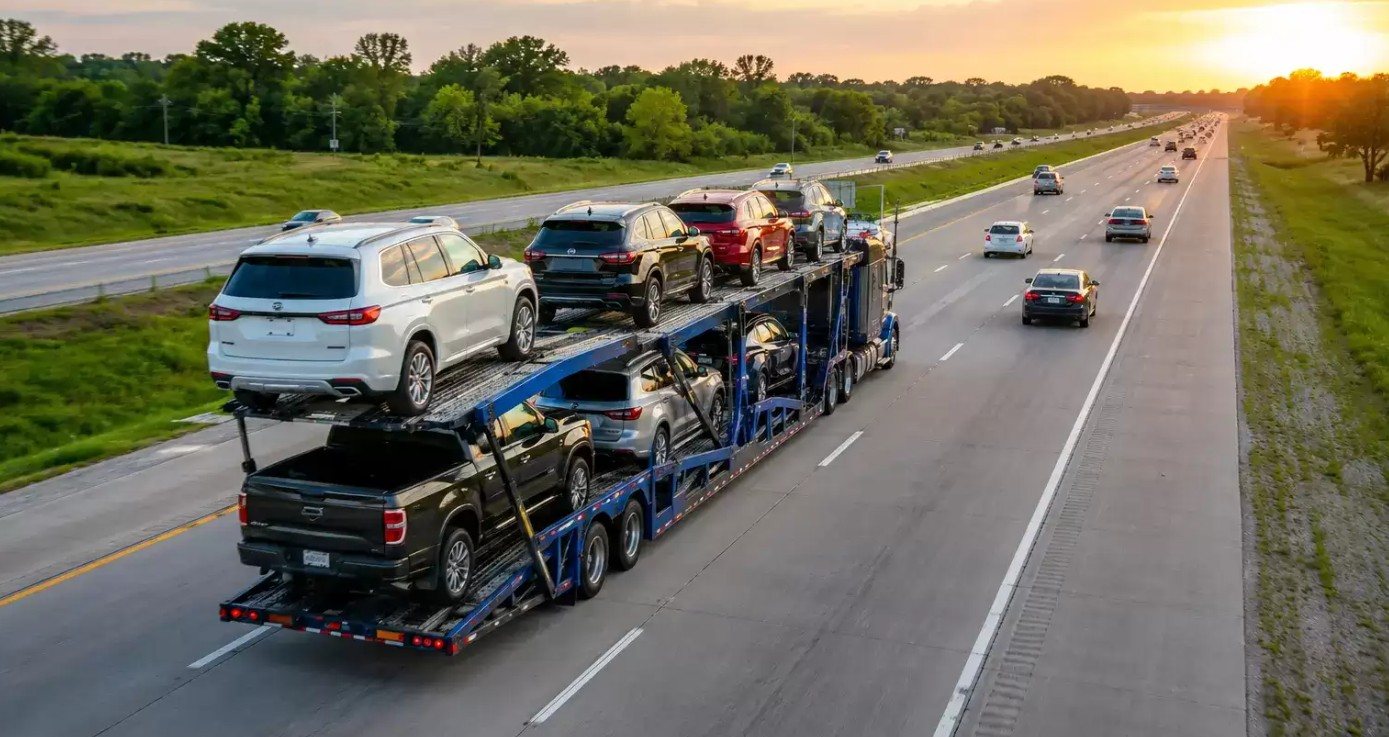
Big-city pages love to brag about same-day carrier matches. Tuscaloosa deserves the truthful version instead: this is a market that works through its corridor, not its skyline. The I-20/59 artery running through town connects Birmingham to Meridian and on toward New Orleans, and Birmingham’s deep carrier pool sits an hour up the road — so trucks are nearby constantly, but fewer of them start their day here.
What that means for you, practically: pickup windows run two to five days instead of one to three, and flexibility is worth real money. A carrier finishing a Birmingham load will happily swing through Tuscaloosa tomorrow morning — if your schedule lets them. Demand a precise appointment on a thin day and you’re paying a premium to pull a truck off its route; give a three-day window and you’re the easy booking every dispatcher grabs first.
One more mid-market truth: beware quotes that look like big-city prices on long thin lanes. If someone offers Tuscaloosa-to-Seattle at the same rate as Atlanta-to-Seattle, they’re either planning to relay the car through a hub — fine, if they say so — or planning to call you next week with a higher number. Ask which. We’ll always tell you how your car is actually routed.
Where the money in a T-Town quote goes
Every quote splits into the carrier’s pay and a coordination fee, and in a mid-size market the carrier side is a routing decision as much as a price. A truck can earn your fare two ways: swing through Tuscaloosa on its way somewhere (cheap, common on I-20/59 directions) or stage your car to Birmingham and relay it onto a long-haul rig there (normal for thin lanes, adds a day). Both are legitimate; the difference should be explained to you, not discovered later. When we quote a route that relays, we say so, price the whole chain as one number, and stay responsible for the car across the handoff — the relay is our logistics problem, never your surprise.
And a word on the “instant quotes” some national sites spit out for Tuscaloosa: many are metro averages computed from Birmingham data, off by the exact amount a dispatcher will later call to collect. A quote for this market should mention this market. If yours doesn’t, ask why.
Two local wrinkles worth a paragraph each
The gameday parking economy. In fall, half the driveways and church lots in town moonlight as paid gameday parking — which means the “empty lot” you told the driver about on Thursday may be a hundred tailgates deep by Saturday morning. If your handoff spot doubles as gameday parking, we schedule around the home slate automatically; it’s the most Tuscaloosa scheduling conflict there is.
Lake season. Summer weekends send a steady stream of trucks, boats, and toys up to Lake Tuscaloosa and the river landings. Boat trailers and personal watercraft ship on the same corridor economics as cars — quoted by dimensions, moved by carriers who run marine freight through the Southeast all summer. If the boat and the tow vehicle are both moving, price them as one booking; the pair often shares a truck, and always shares the paperwork.