Tucson, AZ • Licensed • Insured

Car Shipping in
Tucson, AZ

Nationwide Auto Transport

Southern Arizona auto transport, straight off the I-10 corridor — vetted carriers, honest routing, no deposit to book.

  • Licensed Broker & Fully Insured
  • FMCSA Registered
  • Vetted Carrier Network
  • Real-Time Tracking & 24/7 Support
50+States Served
100%Insured Transport
24/7Support & Tracking

Tucson gets described as “Phoenix’s little sibling” by people who haven’t shipped freight through either. In auto transport terms it’s a different animal: a city sitting directly on I-10’s southern transcontinental run, with its own military base, its own retirement corridor, a university, sixty-five miles of desert between it and the Mexican border — and one week a year when the entire logistics map redraws itself for gemstones.

Quick answerTucson sits directly on I-10, so corridor lanes ship fast and fair: $200–$350 to Phoenix, $400–$650 to Southern California, $700–$1,050 to Texas or Denver, and $1,050–$1,650 coast-to-coast for a sedan on an open trailer, with pickup typically in 1–4 days. Gem Show weeks and the retirement-corridor seasons move the schedule in ways covered below. Price your lane in about two minutes.

Ship Guy coordinates car shipping across Tucson and southern Arizona from our office on North Campbell Avenue. The honest version of this market, which you’ll find below: which lanes ride the I-10 corridor at full speed, which ones quietly stage through Phoenix, what Davis-Monthan families need to know at PCS time, how the Gem Show bends three weeks of the calendar, and why the driver will politely decline to take a ten-car rig up your Foothills switchback.

Typical pickup1–3 days
Nearest listed lanePhoenix, AZ · $200–$350
Longest listed laneNew York, NY · $1,250–$1,650
Enclosed option+40–60% over open
Local desk(520) 650-6964 · 6a–11p MST

Updated July 25, 2026 · rate figures: July 2026 board.

Tucson Auto Transport Lanes & Current Rates

The southern Arizona routes we book most. Sedan, running, open trailer; the Phoenix hop is priced as the carrier-minimum short haul it is.

RouteApprox. distanceEst. transitEst. open rate*
Tucson, AZ → Phoenix, AZ~115 mi1 day$200–$350Get price
Tucson, AZ → El Paso, TX~320 mi1–2 days$350–$500Get price
Tucson, AZ → San Diego, CA~410 mi1–2 days$400–$600Get price
Tucson, AZ → Los Angeles, CA~490 mi1–2 days$450–$650Get price
Tucson, AZ → Albuquerque, NM~450 mi1–2 days$450–$650Get price
Tucson, AZ → Dallas, TX~870 mi2–4 days$700–$950Get price
Tucson, AZ → Denver, CO~900 mi3–4 days$750–$1,050Get price
Tucson, AZ → Chicago, IL~1,750 mi4–6 days$1,050–$1,400Get price
Tucson, AZ → New York, NY~2,400 mi5–8 days$1,250–$1,650Get price

*Estimates as of July 2026 for a standard sedan. SUVs and trucks add roughly 10–25%; inoperable vehicles add $100–$200 for winch loading. Lanes that stage through the Phoenix hub are quoted as one number — the relay is our problem, not your surprise.

Best time to book from here

Winter visitors and gem-show weeks stack January–February; university tides hit August and May. Monsoon afternoons argue morning handoffs — and summer rates run kindest.

On the Corridor, Near the Hub: How Tucson Lanes Really Price

Two facts set every Tucson quote, and they pull in opposite directions. Fact one: I-10 runs straight through town, carrying a continuous stream of car haulers between Southern California, El Paso, and Texas. On those east-west lanes, Tucson is a full-speed market — carriers grab local loads without leaving their route, matches come fast, and pricing tracks the corridor rate almost mile for mile.

Fact two: the state’s great sorting yard sits a hundred and fifteen miles north. Lanes that leave the corridor — the Pacific Northwest, the Mountain States, much of the Midwest — frequently begin with a short hop to the Phoenix hub, where your car joins a long-haul load built from the whole Valley’s freight. That relay is normal, efficient, and nothing to fear when it’s disclosed: it adds a day, occasionally a modest premium, and one extra handoff that should be documented like any other.

So the question to ask any Tucson quote — ours included — is simply: is this a corridor lane or a hub lane? We answer it unprompted on every booking, because the difference explains your timeline better than any tracking app. And if a competitor quotes a northbound lane at corridor speed and corridor price, ask them which truck. There’s usually a pause. Routing honesty costs nothing and predicts everything: the brokers who volunteer it tend to be straight about the rest, too.

Gem Show Season: Three Weeks When Tucson Is the Center of the World

Every late January through mid-February, Tucson hosts the largest gem and mineral showcase on Earth — not one show but dozens, spread through tents, hotels, and halls from downtown along the freeway frontage. The city’s population swells by tens of thousands of dealers and buyers, every hotel fills, and the streets around the show zones move at the pace of someone admiring quartz.

For vehicle shipping, the season means three practical things. Pickup and delivery spots shift: addresses inside the show footprint — downtown, the I-10 frontage corridors — get swapped for calmer handoff points a mile out, which we arrange as routinely as we check the calendar. Demand firms modestly: dealers truck inventory in and out, visitors extend stays, and carrier space tightens for the peak fortnight. And deliveries to the show itself — vendors moving stock, buyers shipping purchases onward — run on show-schedule timing we coordinate directly with the venue windows.

None of it is a problem if your broker knows the season exists. All of it is a surprise if they’re quoting Tucson from a call center that thinks February is just February.

Davis-Monthan: PCS Season and the Base That Anchors the Southeast Side

Davis-Monthan AFB shapes Tucson’s shipping market the way the university shapes its neighborhoods — steadily, and in waves. Rotation seasons send a reliable current of PCS vehicle moves through our books: inbound airmen shipping a car ahead of a report date, families sending a second vehicle after housing settles, separations and retirements heading every direction at once.

Military shipments run on the military’s clock, so that’s the clock we use: the schedule builds backward from the report date, the paperwork is kept claim-ready for entitlements and reimbursements where they apply, and when orders change — when, not if — the booking bends instead of breaking. Base access itself is simple: carriers don’t enter the gate; handoffs happen at the commercial corridors just outside, Craycroft or Golf Links, timed to your duty schedule. The full program, including what the government-arranged POV process does and doesn’t cover, lives on our military shipping page.

And because every D-M family asks: yes, the Boneyard is visible from the air on approach, no, we cannot ship you a retired B-52, and we’re as disappointed about that as you are.

Desert Realities: Heat, Monsoons, and the Wash Rule

Tucson shares the Sonoran summer with the rest of southern Arizona, and the shipping adaptations are mostly the carrier’s to make — early loading hours, tire-pressure vigilance, shade-smart staging. Your half of the bargain is a battery that tests healthy (heat murders weak ones faster than any winter) and honesty about anything already marginal on the car; a vehicle that won’t restart at a 110-degree handoff turns a ten-minute stop into an afternoon.

What’s more distinctly Tucson is the monsoon’s local signature. From July into September, afternoon storms drop sudden sheets of rain that turn dry washes into moving water — and this city is laced with washes. Every local knows the rule: you don’t cross a running wash, not in a sedan, and emphatically not in seventy-five feet of loaded trailer. Drivers wait the water out — it usually recedes within the hour — or route around, and a delivery slides from afternoon to evening. We’ll always take that trade, and after one summer here, so will you.

The upside of the same geography: from October to May, Tucson offers some of the most reliable shipping weather in the nation — no ice, no snow closures, no hurricane watch. The corridor runs like a conveyor — which is exactly why the retirement corridor times its migrations to it, and why winter transplants from the snow states describe their first Arizona shipment as suspiciously uneventful.

The Border Question, Answered Straight

Sixty-five miles south of our office, I-19 ends at Nogales and the Mexican border — close enough that we field the question weekly: can you ship my car to Mexico? The straight answer: not the way domestic shipping works, and anyone who tells you otherwise is skipping the important part.

U.S. carriers and brokers operate to the border, not across it. A vehicle export to Mexico runs through a licensed customs broker or freight forwarder who handles the crossing paperwork — title verification, Mexican import requirements, the port-of-entry process at Nogales or elsewhere. Our role is the domestic leg done right: pickup anywhere in the country and delivery to your forwarder’s U.S.-side facility, timed to their schedule, exactly as we do for ocean exports elsewhere. Northbound, the mirror applies — once a vehicle is legally imported and released on the U.S. side, we take it anywhere.

If you don’t have a forwarder yet, we’ll happily explain how the process fits together before you commit to anything. What we won’t do is quote the border crossing as if it were a delivery to Sahuarita — and you should be suspicious of anyone who does.

Who Ships in Tucson: The Five Regulars

The seasonal household. The retirement corridor’s twice-yearly migration is the market’s heartbeat — a sedan down in November, home in April, often the same customers on the same lanes for a decade. Many keep our number saved under “car guy,” which we’ve decided to take as a compliment.

The PCS family. Davis-Monthan’s rotations supply a constant current of military moves, covered in depth above — report-date scheduling, claim-ready paperwork, and bookings that bend when orders do.

The remote buyer. Tucson’s dry-climate used cars — rust-free trucks especially — sell nationwide online, and we bridge the distance both ways: inspection-day coordination with a seller you’ve never met, photos before loading, delivery to a driveway two thousand miles from the listing.

The corridor commuter. Households splitting time between Tucson and Phoenix, or Tucson and San Diego, treat the short lanes almost like a service: a car repositioned for a season, a vehicle handed down to a kid at the other end of I-10, a second car following a job. Short-haul minimums apply, but so does short-haul simplicity — often booked Monday, delivered Wednesday.

The collector. Southern Arizona’s barn-find and restoration culture is quietly excellent, and its output rides enclosed trailers north to auction season every January. If your project is finally finished — congratulations, and give us two weeks to route the right trailer through town.

Booking, for the record, takes about two minutes whichever regular you are: quote online or by phone, pick a pickup window, and pay nothing until a carrier is actually assigned. The dispatch call names your driver and truck, the pickup inspection documents the car, and the delivery walk-around closes it out — with our office on Campbell answering the phone at every step between, seven days a week.
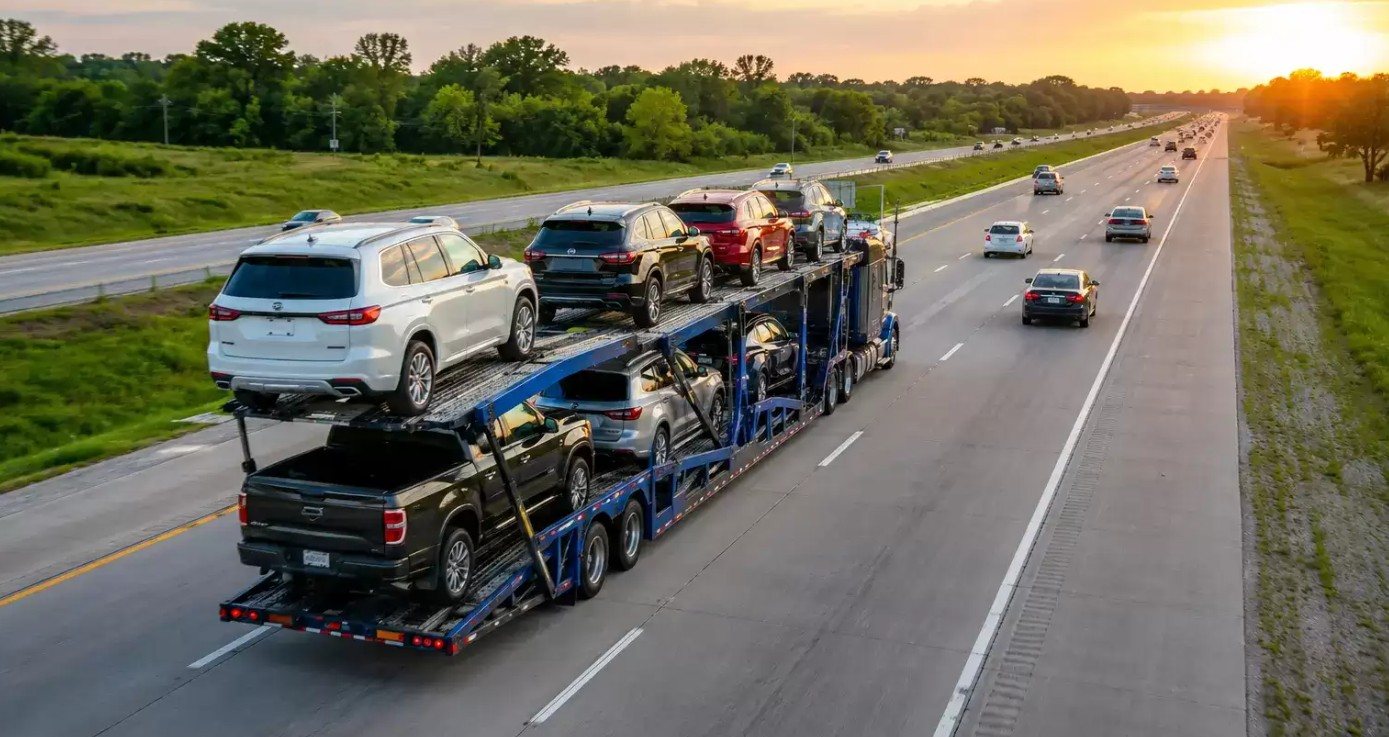
Open or Enclosed for Southern Arizona?

The desert makes this an easier call than most places — with one Tucson-specific exception.

The corridor workhorse

Open Transport

Dry air, no road salt, three hundred sunny days: open transport in southern Arizona is about as low-risk as the method gets anywhere in America. Daily drivers, family SUVs, PCS vehicles, student cars — open, every time, and priced by the deepest carrier supply on the I-10 corridor.

  • Fastest matches on every corridor lane
  • Dust film on arrival is the worst-case cosmetic outcome
  • Cargo coverage typically $100K–$250K
The exception’s exception

Enclosed Transport

Tucson’s collector scene skews vintage — air-cooled classics, restored trucks, the occasional show car headed north to auction season. For those, and for anything low, rare, or freshly painted, enclosed earns its premium with soft straps, liftgates, and a sealed ride through the dust.

  • Roughly 40–60% above open rates
  • Routes through on the Phoenix–Scottsdale collector circuit — book 1–2 weeks out
  • Cargo coverage typically $250K–$1M

Local footnote: if your car wears fresh paint or a vinyl wrap, summer open transport adds one real risk — monsoon-season dust followed by rain can spot a soft finish. Cured paint doesn’t care; new work might. Details: open vs. enclosed.

From the Foothills to the Valley Floor: Where We Pick Up

The city, the corridor towns, and the desert edges — each with its own access logic.

Downtown TucsonUniversity / Sam HughesCatalina Foothills Oro ValleyMaranaCasas Adobes Rita RanchVailSahuarita Green ValleySaddleBrookeTanque Verde Drexel HeightsThree PointsBenson

Foothills, grades, and washes

The Catalina Foothills reward the eye and punish the trailer: steep driveways, blind switchbacks, and wash dips a loaded rig can bottom out in. Foothills handoffs happen at the corridor roads — Campbell, Oracle, Ina, Sunrise — where there’s room to load flat and pull away safely. Ten minutes of your day; years off the driver’s.

The retirement corridor’s two seasons

Green Valley to the south, Oro Valley and SaddleBrooke to the north: tens of thousands of seasonal residents whose vehicles arrive October–December and depart April–May, as dependable as the weather they came for. Inside those windows, book two to three weeks out; shipping against the flow, the corridor is one of the cheapest quiet markets in the Southwest.

University district rhythms

The U of A adds its August-in, May-out pulse to the market — smaller than the retirement swing but concentrated tight around campus, where streets are narrow and permit-parked. Student handoffs work best a block or two out on Speedway, Campbell, or Park, and never on a move-in Saturday.

Why Ship with Ship Guy in Tucson

Licensed & bonded

FMCSA broker authority, $75,000 surety bond, and a standing invitation to verify both in SAFER before a dollar changes hands.

Southern Arizona is the job

Corridor-versus-hub routing, wash rules, Gem Show weeks, D-M gate logistics — the local knowledge is the product, and ours lives on Campbell Avenue.

Routing disclosed, always

Corridor lane or Phoenix relay — you’ll know which your shipment is, in plain words, before you book. It’s a one-sentence answer that most quotes mysteriously omit.

No deposit to book

You pay when a carrier is assigned, not when a salesperson wants to lock you in — in Gem Show season, PCS season, or any other week of the year.

We also serve the wider region

NogalesSierra VistaCasa GrandeEloyWillcoxBisbeeDouglasAjo

Find Us on Campbell Avenue

Our Tucson office sits on the Campbell corridor with the Catalinas out the window — central to downtown, the university district, and the Foothills. Seven days a week on the local line.

Ship Guy Auto Transport — Tucson

Address2601 N Campbell Ave, Suite 990
Tucson, AZ 85719
Local phone(520) 650-6964
HoursMonday–Sunday
6:00 AM – 11:00 PM MST
Tucson Car Shipping FAQ

Common Questions

What does it cost to ship a car to or from Tucson?
Sedan on open transport: about $200–$350 up to Phoenix, $400–$650 to Southern California, $350–$650 across the Southwest to El Paso or Albuquerque, $700–$1,050 to Texas or Denver, and $1,050–$1,650 for Midwest and East Coast runs. Enclosed typically runs 40–60% above open. Your free quote prices the exact lane and dates.
Is Tucson slower or pricier to ship from than Phoenix?
Slightly, and only on some lanes. I-10 corridor routes — California, El Paso, Texas — match nearly as fast as Phoenix because carriers roll right through town. Lanes headed north or east off the corridor often stage through the Phoenix hub, which can add a day and a modest premium. We tell you which kind your route is before you book.
When is the Gem Show, and does it really affect car shipping?
Late January through mid-February, and yes — the city absorbs tens of thousands of visitors, hotels and side streets fill, and the showcase zones around downtown and the freeway frontage get congested. Deliveries still run on schedule; handoff spots just shift away from the show footprint for those weeks, and we plan that automatically.
Do you handle military moves at Davis-Monthan?
Every rotation season. PCS vehicle shipments in and out of D-M are a steady part of our Tucson work — we build the schedule around your report date, paper everything for reimbursement claims where they apply, and re-time legs when orders change rather than restarting your booking.
Can you pick up in the Catalina Foothills or out past Marana and Vail?
Yes, with the standard desert-edge caveat: steep grades, tight switchbacks, low washes, and unpaved stretches aren't territory for a loaded ten-car rig. Foothills and edge-of-town customers usually meet the driver at a main-road shopping center — Oracle, Ina, or Houghton corridors — and the handoff takes ten minutes.
What about monsoon season — can storms delay my shipment?
Occasionally, by hours. July through September brings afternoon storms that can flood wash crossings and briefly close surface streets; drivers wait them out or route around, exactly as every Tucsonan does. Never drive into a running wash applies to car haulers too — and to a degree we consider a feature, not a bug.
Can you ship my car to Mexico from Tucson?
Not directly — U.S. domestic carriers and brokers don't cross the border. Vehicle exports to Mexico run through a customs broker/forwarder who handles the crossing at Nogales or another port of entry; we can deliver your vehicle to your forwarder's U.S.-side facility and coordinate timing with them. What we won't do is pretend the border leg is a normal delivery.
Do you ship for winter residents in Green Valley, SaddleBrooke, or Oro Valley?
Constantly — the retirement corridor north and south of the city runs its own seasonal rhythm: vehicles arriving October through December, heading home April and May. Book two to three weeks ahead inside those windows; the reverse directions are quiet and cheap.
Where is Ship Guy located in Tucson?
2601 N Campbell Ave, Suite 990, Tucson, AZ 85719 — on the Campbell corridor between downtown and the Catalina Foothills. Phones are answered seven days a week from 6:00 AM to 11:00 PM at (520) 650-6964.

Ready When You Are

Ready to Ship from the Old Pueblo?

Get a free, no-obligation quote in about 60 seconds — or call and talk to a real specialist right now.

Ship Guy is a licensed, bonded auto transport broker (MC #1457715USDOT #3932149) with a local office at 2601 N Campbell Ave Suite 990, Tucson, AZ 85719 • (520) 650-6964 • open 7 days, 6 AM–11 PM, serving Tucson, the retirement corridor, and all of southern Arizona. Verify our operating authority anytime in the FMCSA SAFER database. Rate estimates on this page reflect current lane conditions and are refreshed quarterly. Learn how insurance & claims work and who we are.

Written & reviewed by [Full Name], [Title], [X] years in vehicle logistics • Last updated: