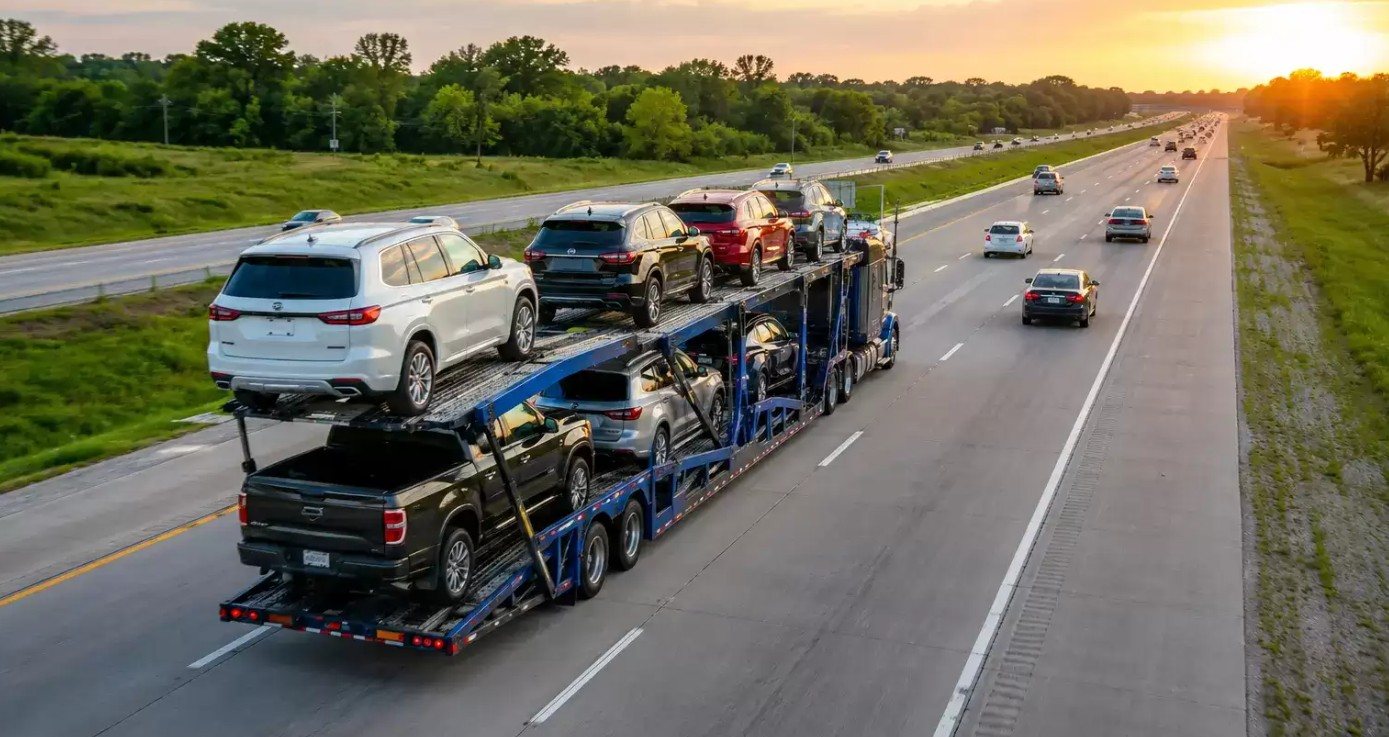
The western anchor — plant-precise, freight-town fluent, and handshake dependable where the West begins.
Licensed Broker & Fully Insured
FMCSA Registered
Vetted Carrier Network
Real-Time Tracking & 24/7 Support
50+States Served
100%Insured Transport
24/7Support & Tracking
Fort Worth anchors the Metroplex’s western half with an identity no pool-sharing arrangement dilutes: the city that builds fighters and hosts the reserve base, runs one of the continent’s great logistics corridors at Alliance, keeps the stockyards’ heritage and a cultural district of world rank three miles apart, and opens onto ranch country the moment the loop lets go. The freight economics are shared with the whole region — our Dallas page maps the one-market mechanics — and the fluency this page adds is Cowtown’s own: defense-grade standards, freight-town culture, and western reach.
Quick answerFort Worth ships where the West begins, on the Metroplex’s full pool: $185–$415 across Texas and up to Oklahoma, $425–$990 through the high plains, the mountains, and the desert West, and $910–$1,330 to the coast — pickup in 1–3 days. Defense rotations, Alliance freight culture, ranch-country reach: Cowtown’s own book, below. Price your lane in two minutes.
Ship Guy works the west side from University Drive by the cultural district — downtown and the stockyards, TCU’s calendar, the Alliance corridor north, the mid-cities east, and the ranch country west to the Brazos. Below: the western anchor’s market position, the defense-industrial trade, the Alliance corridor’s freight culture, the westward reach, and the year on this side of the pool.
Typical pickup1–3 days
Nearest listed laneDallas, TX · $185–$300
Longest listed lanePhoenix, AZ · $680–$990
Enclosed option+40–60% over open
Local desk(682) 384-3499 · 6a–11p CT
Updated July 25, 2026 · rate figures: July 2026 board.
Fort Worth Shipping Lanes & Current Rates
The western anchor’s routes — note the Lubbock and West Texas rows, because this side of the pool faces west. Sedan baseline, open trailer.
RouteApprox. distanceEst. transitEst. open rate*
Fort Worth, TX → Dallas, TX~35 misame day$185–$300Get price
Fort Worth, TX → Oklahoma City, OK~200 mi1 day$205–$335Get price
Fort Worth, TX → Austin, TX~190 mi1 day$205–$335Get price
Fort Worth, TX → Houston, TX~265 mi1 day$235–$385Get price
Fort Worth, TX → San Antonio, TX~270 mi1 day$250–$405Get price
Fort Worth, TX → Lubbock, TX~280 mi1 day$260–$415Get price
Fort Worth, TX → El Paso, TX~600 mi2 days$425–$640Get price
Fort Worth, TX → Albuquerque, NM~620 mi2 days$425–$640Get price
Fort Worth, TX → Denver, CO~780 mi2–3 days$555–$825Get price
Fort Worth, TX → Phoenix, AZ~1,030 mi3 days$680–$990Get price
*West-side board, July 2026, sedan figures; SUV and pickup premiums run 10–25%, oversized quotes go dimensional, winch loading adds $100–$200 for non-runners. Program-award announcements ripple defense hiring waves; spring hail forecasts occasionally counsel a garage-kept car’s patience.
Best time to book from here
Stock-show weeks open the year; summer peaks the family season. The west side’s value window: late fall, defense cycles steady and corridors clear.
The Western Anchor: Position, Pool, and the Westward Face
Fort Worth’s market position reads simply: full Metroplex depth — the shared pool answers from either downtown identically, the same-day Dallas row prices like the errand it is — plus a westward orientation the eastern half doesn’t carry. This side faces the high plains: the Lubbock and West Texas rows run from here naturally, the El Paso corridor departs this end of the region, and the ranch-country geography past the loop belongs to Fort Worth’s working territory by history and habit alike. When the pool’s eastern trades cluster around towers and campuses, the western anchor’s cluster around plants, rails, and ranches — same depth, different book.
The receiving map runs Cowtown’s full range: downtown and the near side’s revival districts on appointment choreography, the cultural district’s civilized streets (museum-quality neighborhoods, museum-quality manners), TCU’s calendar running the collegiate standard each August and May, the west-side neighborhoods driveway-simple, and the northern corridor’s master plans on gate-code routine. One office by the museums, the whole western half in range — and the eastern half a phone call and thirty-five miles away, per the founding arrangement. The arrangement has outlasted every rivalry joke ever told at its expense. Two cities that genuinely like being different turned out to make one excellent freight market — the punchline nobody east of the river expected, delivered daily on schedule. Cowtown never wanted to be Dallas and Dallas never wanted to be Cowtown, and the freight market both built together is better than either would have built alone.
The Defense-Industrial Book: Contracts, Orders, and Discretion
The west side’s signature economy ships on two calendars at once. The program calendar: the plant and its supplier orbit rotate engineering and program talent on contract cycles, award announcements ripple hiring waves our board reads in the trade press like the rest of the town, and the relocations run corporate machinery with aerospace-tolerance documentation and the standing discretion security-adjacent employment expects — no names in the notes, no chatter at the curb, windows kept like milestones. The orders calendar: the joint reserve base’s rotations run our full military program — report dates anchoring schedules, claim-ready paperwork, penalty-free re-timing when orders amend, gate-adjacent handoffs on the commercial corridors.
The two calendars braid constantly — service members separating into plant careers, contractor families moving between defense towns on our national map, the reserve weekend’s rhythm threading the base’s neighborhoods — and the craft serves the braid with one standard: precision as the baseline, not the upgrade. A city that builds aircraft to tolerance measured in thousandths has no patience for logistics measured in maybes; neither, on this side of the pool, do we. Thousandths on the line, minutes on the window: different units, identical religion. Both congregations meet daily and neither tolerates a missed service.
Freight Town: The Alliance Corridor’s Culture
The corridor north of town is a logistics city in its own right — intermodal rail moving the continent’s containers, the cargo airport’s dedicated runways, distribution campuses at scales measured in millions of square feet — and its gravity shapes the whole west side’s shipping culture: carrier traffic runs thick on this end of the Metroplex, industrial scheduling discipline saturates the local trade, and the region’s workforce speaks freight as a first language. For vehicle shipping, the inheritance is practical: equipment density on the north end, multi-car capacity cycling through the corridor daily, and a vendor ecosystem where “on time” is table stakes because the whole neighborhood’s economy runs on it.
The corridor’s residential book compounds the density: the master-planned communities that grew around the logistics economy ship their relocating households on the gate-code standard, the corridor employers’ hiring waves land booking clusters on program schedules, and the north-side growth arc generally — among the region’s fastest — keeps the receiving map expanding at subdivision speed. A town where logistics is the family business makes a satisfying place to practice it; the bar is high, the customers are fluent, and the compliments, when earned, come from professionals. We frame those; amateur praise is kind, but a freight town’s nod is currency. We’ve banked enough to retire on and keep working anyway. Compounding works on reputation exactly the way it works on money, and the west side pays the best rates in the region. Withdrawals available on request; references arrive with area codes 817 and 682 attached.
Stockyards to the Brazos: The Western Reach
West of the loop the territory earns the city’s motto: Weatherford’s horse country runs an equine economy whose trailer culture predates ours by a century (we ship the trucks and the toys; the horses have their own professionals), the Brazos towns meet at courthouse squares and highway junctions by settled custom, and the ranch geography’s gate-coordination craft — call ahead, mind the cattle guard, close what you open — runs on manners the region never saw reason to retire. The second-home and retirement currents thread the same map: lake places on the Brazos chain, ranchettes on the western corridors, and the estate trade handled with the patience the country expects.
The heritage economy adds its own gentle trade: the stockyards’ visitor engine, the western-culture calendar’s events, and the museum district’s occasional fine-art-adjacent vehicle move — a collector piece to an exhibition, a donor’s classic to a gala — handled at the enclosed tier’s full standard. Cowtown’s past and its present share the same streets on purpose; the shipping trade that serves both learned to keep boots and white gloves in the same kit. Both polished, both used weekly, neither for show. Utility with polish: the Fort Worth aesthetic, applied to freight. The cultural district hangs masterpieces three miles from working stockyards and sees no contradiction; neither, in our line, do we. Remington in the gallery, longhorns up the street, and a dispatch board holding both standards at once: the local balance, professionally kept.
TCU and the Institutional Currents
The university writes the west side’s collegiate score: August’s arrival tide books ahead with remote-parent coordination and handoffs on the wide corridors off the campus core, May’s exodus scatters graduates across the state’s employer map, and football Saturdays concentrate the University Drive corridor in scheduled purple bursts every local — this office included, from the window — plans around by habit. The medical district south of downtown adds its own steady current: the hospital systems’ recruiting cycles, residency cohorts on the national calendar’s weeks, and the clinical-professional relocations that ship on start-date machinery everywhere medicine concentrates.
The institutional book rounds out with the civic calendar’s great fixture: the stock show’s January-February run fills the near north side with the year’s most cheerful congestion — livestock haulers owning the roads they’ve owned for a century, exhibitor logistics running the event-grade craft, and civilian deliveries near the grounds scheduling around the published calendar with a tip of the hat. A city that hosts the West’s oldest show knows event choreography cold; the vehicle trade just follows the parade route, punctually. A century of Januarys taught the whole town the drill; we merely enrolled. Perfect attendance since, ribbons declined, lessons applied. The stock show teaches logistics the way the plant teaches tolerances: by example, annually, to anyone paying attention. We pay attention professionally. A hundred and thirty years of Januarys have refined the syllabus to something close to perfect, and auditing it annually is the west side’s best free education. We re-enroll every winter, take notes in the margins, and apply the coursework to every window the other fifty weeks.
The West-Side Year
The calendar, straight through: winter runs mild with the region’s shared ice-morning custom — a few civic pauses, next-afternoon melts — and the stock show’s weeks filling the near north side with the year’s most cheerful traffic; spring crosses storm season first on this side, hail forecasts occasionally counseling a garage-kept car’s patience, while the defense calendar’s spring cycles land their clusters; summer peaks the family season on school calendars with morning-loading heat; and fall ships the sweetest months — mild corridors, TCU Saturdays concentrating campus traffic in scheduled bursts, and the ranch country’s autumn light making every western assignment the board’s favorite.
The constants beneath: pool depth from either downtown, Alliance density on the north end, the defense calendars’ steady braid, and a dispatch culture matched to a city that holds two reputations — cowboys and culture — without strain. Precision and manners were never opposites here; they’re the local style, and we ship in it. Yes ma’am, no sir, right on time: the west side’s whole style guide. Second edition unchanged from the first, because it never needed revising.
Open or Enclosed in Cowtown?
The pool ships open at Metroplex depth; the enclosed tier keeps boots and white gloves ready.
The west-side answer
Open Transport
Defense rotations, corridor households, ranch-country errands, the same-day Dallas shuttle: open trailers on shared-pool depth with freight-town scheduling culture behind every window.
Full Metroplex pool from the western anchor
Military program protocol standard at the base
Cargo coverage typically $100K–$250K
The cultural-district answer
Enclosed Transport
The collections a museum town appreciates properly, the western-heritage showpieces, and the executive garages west of the pool: enclosed walls, liftgate patience, and documentation to exhibition standard.
Roughly 40–60% above open rates
Show and gala moves booked to the event calendar
Cargo coverage $250K–$1M, higher arranged
Cowtown rule: the daily driver rides open across the pool; the heritage piece rides enclosed to the exhibition. Full comparison: open vs. enclosed.
The Districts and the West: Where We Pick Up
Downtown to the ranch gates — each with its practiced answer.
Downtown / SundanceCultural DistrictStockyards / NorthsideTCU / UniversityFairmount / Near SouthsideWestover HillsRidgleaArlington HeightsKellerAlliance corridorSaginawNorth Richland HillsBenbrookBurlesonWeatherford
The fighter-plant standard
A city that assembles front-line aircraft holds its industrial trades to aerospace tolerances, and the vehicle logistics around the defense economy inherited the culture: documentation to program-office grade, schedules honored like delivery milestones, and the discretion security-adjacent employment considers a birthright. Serving the plant’s orbit taught our west-side operation its standards; every driveway booking west of the pool collects them.
Alliance: logistics as hometown industry
The corridor north of town runs one of the continent’s great logistics complexes — intermodal rail, a cargo airport, distribution campuses measured in millions of square feet — and freight culture saturates this end of the Metroplex accordingly: carriers thick, scheduling industrial, and the whole trade fluent in a town where moving things well is the family business. Vehicle shipping just joined the tradition; the tradition was already excellent.
Where the West begins, literally
Past the loop, the territory turns to horse country and Brazos ranchland, and the craft turns with it: junction meets at courthouse squares and highway crossings, gate coordination past the cattle guards, and windows that respect distances the map understates. Fort Worth kept the West’s manners while building a modern city’s market; the combination is the whole address, and we deliver to all of it.
FMCSA authority under the $75,000 surety bond — the SAFER record open for inspection, program-office style: verify first, then trust completely.
West-side fluent
Plant tolerances, base protocols, Alliance rhythms, ranch-gate manners — the western anchor’s whole vocabulary, spoken from University Drive.
Freight-town depth
The pool’s full capacity plus Alliance-corridor density — equipment thick, schedules industrial, recovery a corridor cycle away.
Handshake dependable
Windows kept to milestone standard, terms plain as a courthouse square, and nothing owed until a carrier is assigned — the West’s oldest contract, still honored here.
Find Us on University Drive
Our Fort Worth office sits by the cultural district — the museums a walk away, downtown minutes east, the stockyards north, and everything west to the ranch gates answering the same desk. Phones staffed daily on the local number, Central time.
Ship Guy Auto Transport — Fort Worth
Address1300 S University Dr #1745 Fort Worth, TX 76107
What does it cost to ship a car to or from Fort Worth?
Working sedan figures, open transport: $205–$335 to Austin or Oklahoma City, $235–$385 to Houston, $250–$405 to San Antonio, $355–$555 to Memphis, $420–$635 to Albuquerque or Kansas City, $555–$825 to Denver, $595–$875 to Chicago or Atlanta, and $910–$1,330 to the West Coast — Metroplex pricing, because the pool is one even where the identities are two. Enclosed runs 40–60% over.
How fast is pickup on the west side?
Usually 1–3 days on the shared Metroplex pool — equipment loading in Dallas serves Fort Worth the same afternoon, and vice versa — with this side's own geography shipping easily: the cultural district's civilized streets, the west-side neighborhoods' driveways, and the Alliance corridor's logistics infrastructure keeping carriers thick on the north end.
How is this page different from your Dallas page?
Same pool, different city — deliberately: the Dallas page covers the Metroplex's one-market mechanics and the eastern corridor's trades; this one works Fort Worth's own book — the defense-manufacturing rotations, the Alliance logistics corridor, the western reach into ranch country, and the cultural-district and stockyards customs that make Cowtown its own address. Thirty municipalities share the freight; the fluency is what each page adds.
What's the defense-manufacturing trade about?
The west side builds fighters and hosts a joint reserve base, and the industrial-defense economy around them ships steadily: engineering and program talent rotating on contract cycles, service families moving on orders with the military program's full protocol, and the security-adjacent discretion that defense employment expects as standard. Program awards ripple hiring waves; our board reads the trade press like the rest of the town.
What's the Alliance corridor's role?
The north-side logistics city — intermodal rail, cargo airport, distribution campuses at continental scale — keeps freight infrastructure and carrier traffic dense on this end of the Metroplex, and vehicle shipping inherits the density: equipment cycling constantly, industrial-grade scheduling culture, and a corridor that treats logistics as the hometown industry it literally is.
Do you reach the ranch country west?
Daily and gladly: Weatherford's horse country, the Brazos towns, and the ranch geography out the western corridors meet at the sensible junctions — courthouse squares, highway crossings, the feed-store lot by ancient custom — with gate coordination for the properties past the cattle guards. Where the West begins, the craft turns practical and the handshakes still count.
Any weather notes for this side of the Metroplex?
The North Texas book, west-side edition: spring's storm season crosses this side first (hail forecasts occasionally argue a garage-kept car waits a day), the ice mornings run the region's shared civic-pause custom a few times each winter, and the other forty-some weeks ship on weather most markets would envy.
Where is Ship Guy located in Fort Worth?
1300 S University Dr #1745, Fort Worth, TX 76107 — by the cultural district. Local line (682) 384-3499, staffed daily 6:00 AM to 11:00 PM Central.
Get a free, no-obligation quote in about 60 seconds — or call and talk to a real specialist right now.
Licensed & insured
No upfront deposit
24/7 support
Ship Guy is a licensed, bonded auto transport broker (MC #1457715 • USDOT #3932149) with a local office at 1300 S University Dr #1745, Fort Worth, TX 76107 • (682) 384-3499 • open 7 days, 6 AM–11 PM, serving Fort Worth, the Alliance corridor, and the ranch country west. Verify our operating authority anytime in the FMCSA SAFER database. Rate estimates on this page reflect current lane conditions and are refreshed quarterly. Learn how insurance & claims work and who we are.
Written & reviewed by [Full Name], [Title], [X] years in vehicle logistics • Last updated: